Oiled vs. Lacquered Wood Finishes: What Homeowners and Designers Should Know
When selecting cabinetry and millwork finishes, appearance is often the first consideration. Yet understanding how a finish is protected can be just as important as choosing its color or texture.
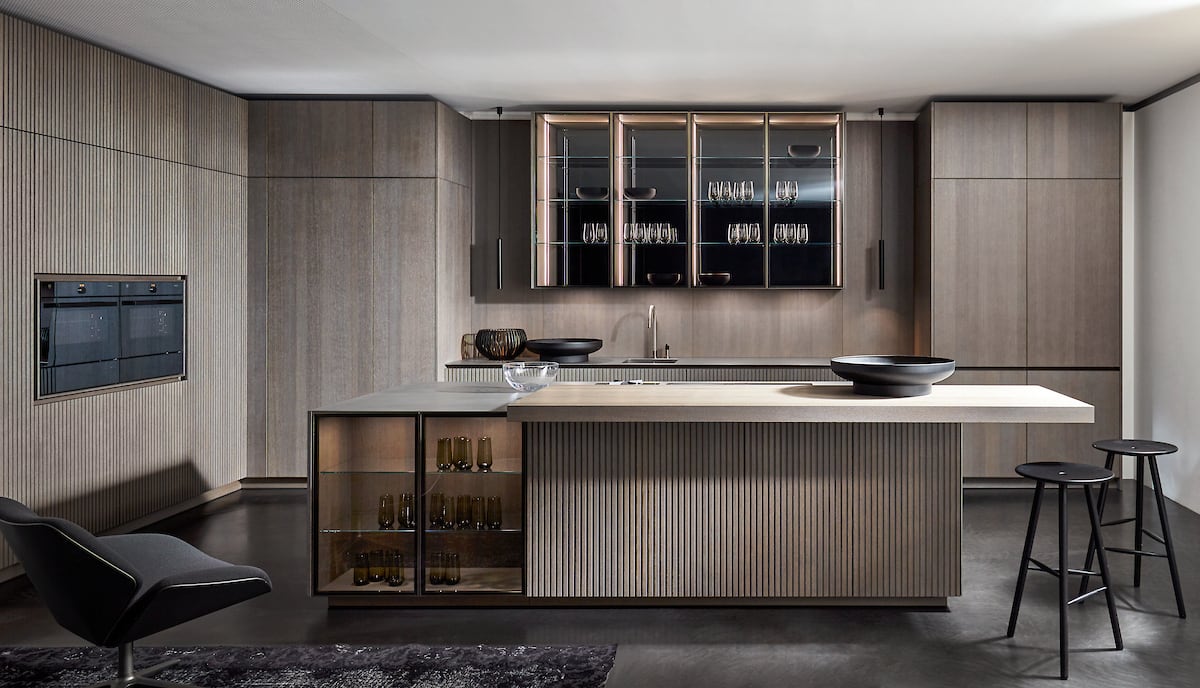
Among the finishes available from eggersmann, Vancouver and select associated finishes feature 3549 Silver Oiled Oak, an oiled veneer that offers a distinctly natural look and feel. Unlike lacquered wood surfaces, this finish allows the authentic character of the wood to remain at the forefront, creating a warm, organic aesthetic that many designers and homeowners find appealing.
Understanding how an oiled finish differs from a lacquered finish can help ensure the right material is specified for the right application.
Understanding Oiled Wood Finishes
Most wood veneers are protected with a lacquer coating that seals the surface and creates an additional barrier against moisture and everyday wear. Oiled finishes work differently. Rather than coating the wood, the oil penetrates the veneer itself. The pores remain visible and the natural texture of the wood can still be felt and appreciated. In the case of 3549 Silver Oiled Oak, the oil contains a subtle silver pigment that contributes to the finish’s distinctive appearance while enhancing the natural grain pattern. The result is a finish that feels exceptionally authentic and connected to the material itself.
A Real-World Surface Test
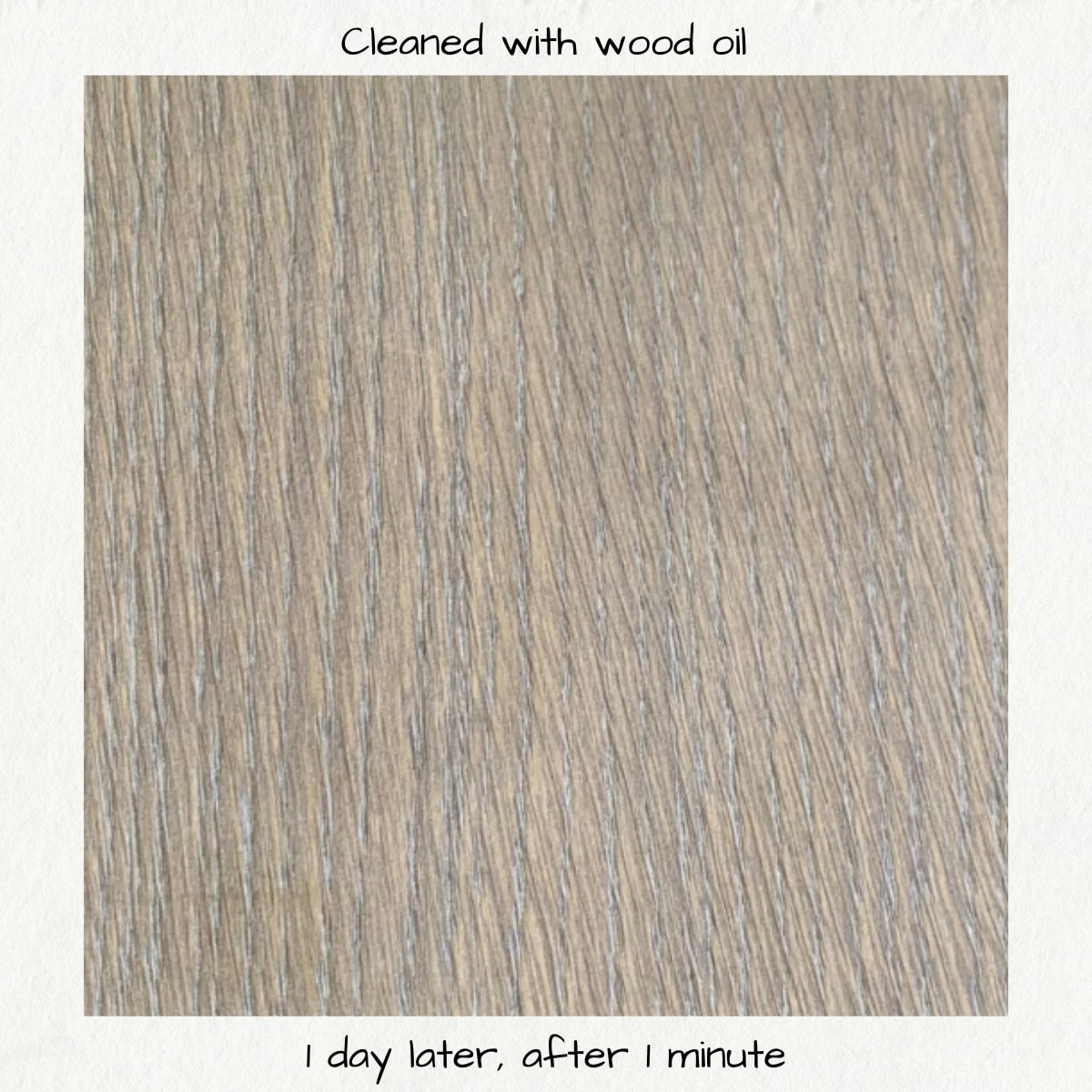
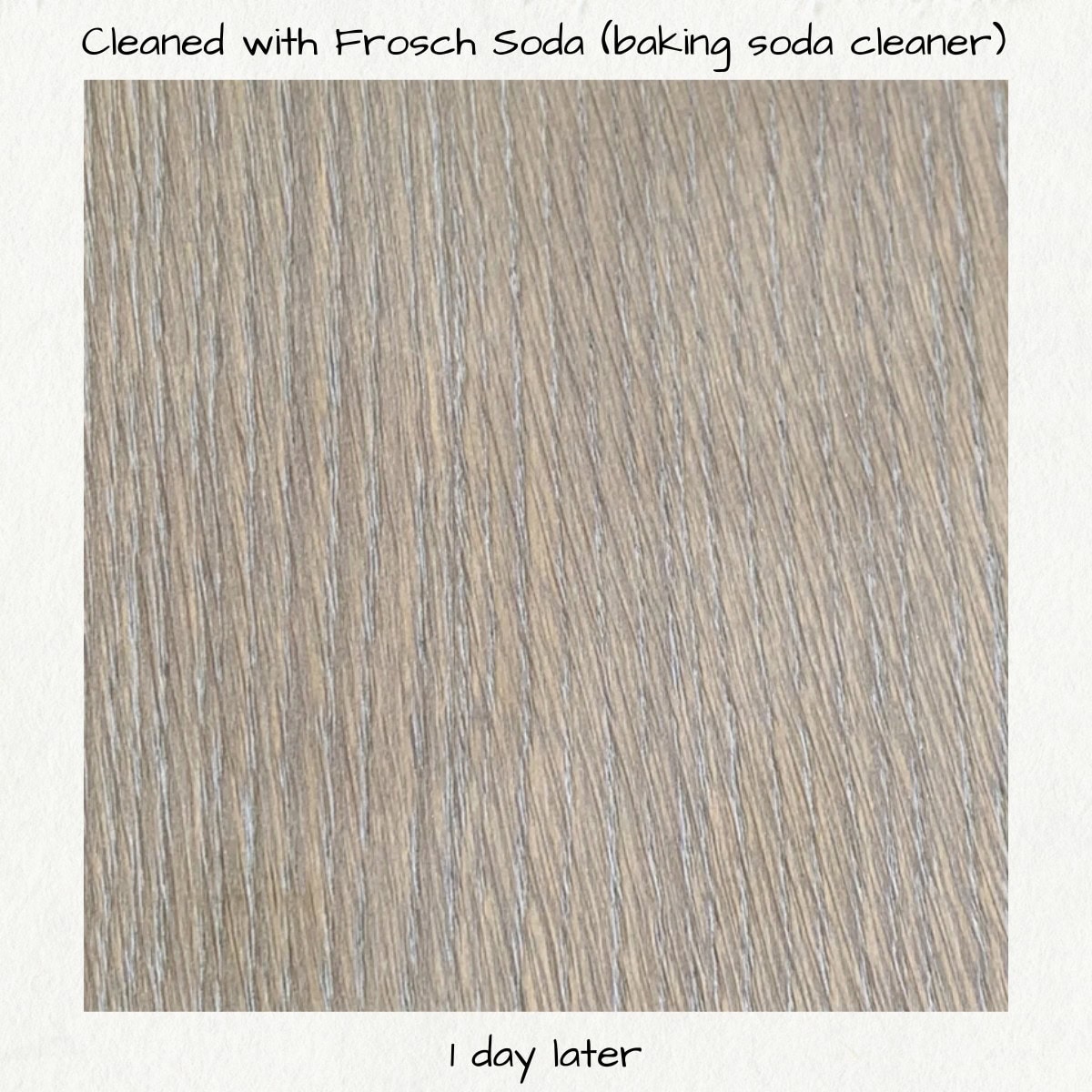
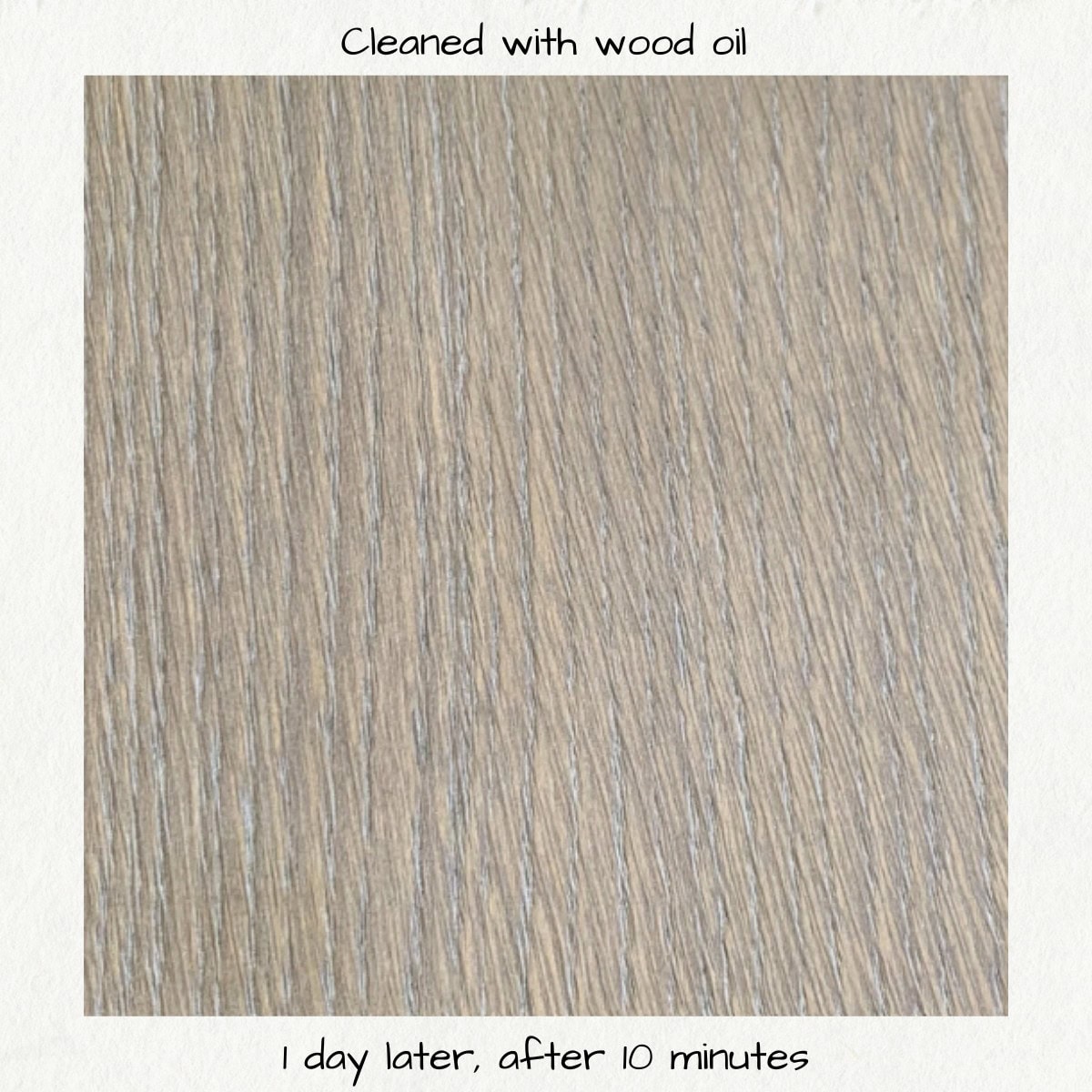
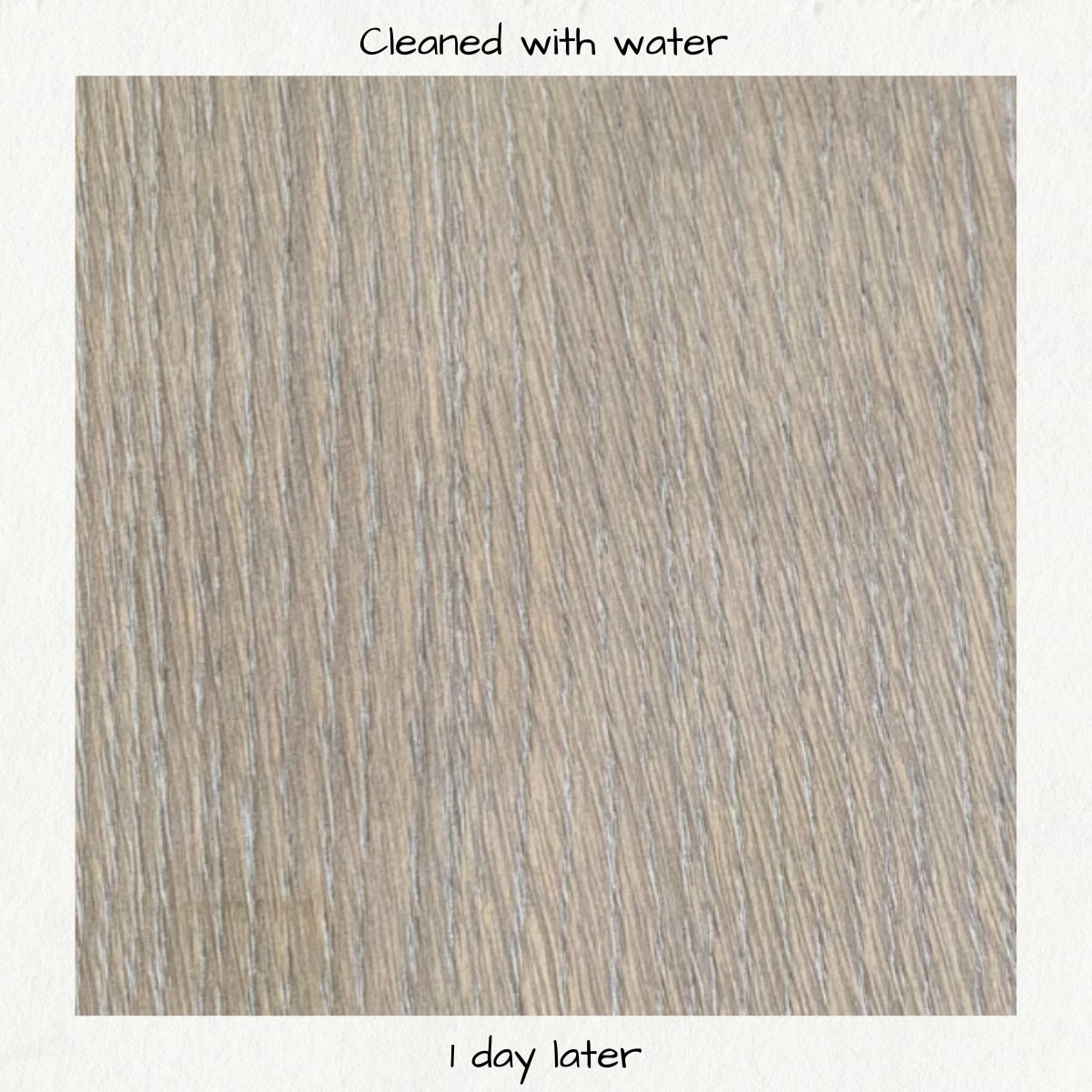
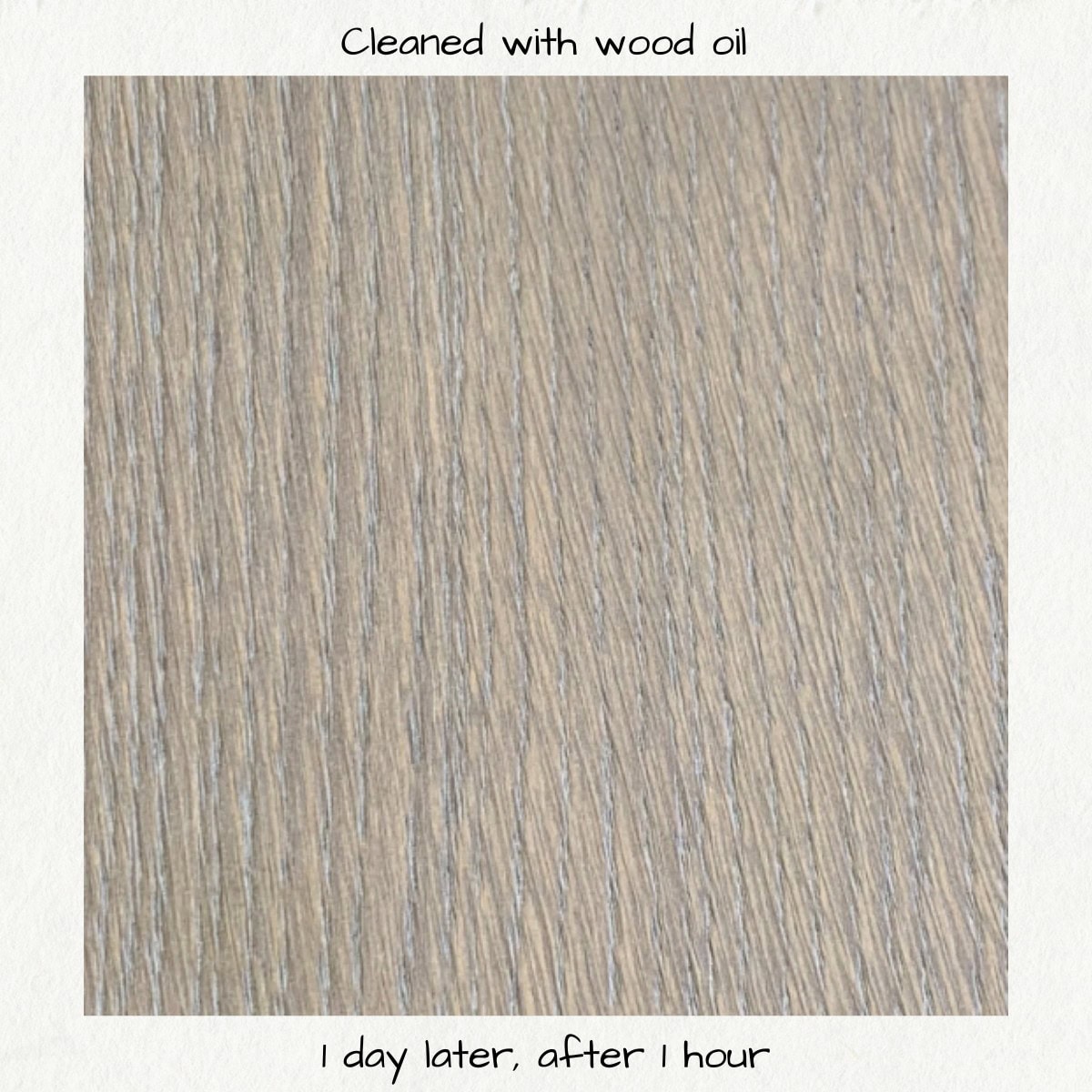
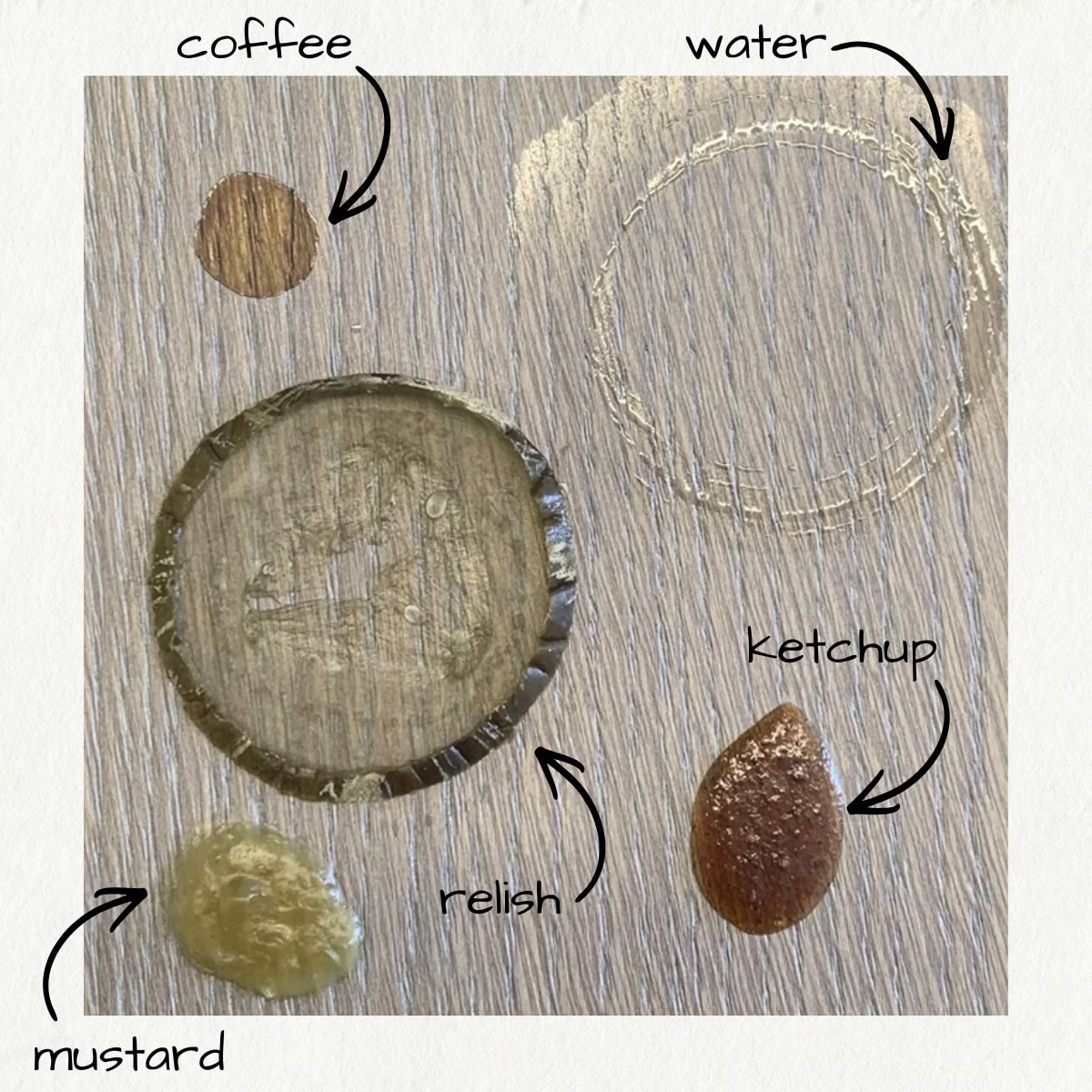
To better understand how natural oiled veneers respond to everyday conditions, the factory conducted a simple surface test using 3549 Silver Oiled Oak. Common household liquids and items were placed directly on the surface and left for varying periods of time before being removed. The purpose was not to create ideal conditions, but rather to demonstrate how prolonged exposure can affect a natural, open-pore wood veneer. Factory testing demonstrates how standing liquids, condensation, and other common household substances can interact with a natural oiled veneer when left unattended.
What the Test Revealed
The results reinforced an important characteristic of all natural oiled wood finishes:
- Standing water can leave visible marks if not removed promptly.
- Condensation from cold glasses may affect the surface over time.
- Oils and residues can penetrate the finish when left unattended.
- Some marks may be reduced through maintenance, while others can become permanent depending on the duration of exposure.
Most homeowners would naturally clean up spills long before reaching these conditions. However, the test serves as a valuable reminder that an oiled veneer should be treated more like a natural wood surface than a heavily protected synthetic material.
Key Takeaway
3549 Silver Oiled Oak is designed to celebrate the beauty of natural wood. Like many premium natural materials, it rewards thoughtful use and care. For homeowners who appreciate authentic textures and organic finishes, the result is a surface with exceptional warmth and character.
The Appeal of Natural Materials
One of the greatest advantages of an oiled finish is its ability to showcase the true character of the wood. Grain variation, texture, and depth remain highly visible, creating a surface that feels warm and genuine. Many designers specifically choose oiled veneers because they celebrate the beauty of natural materials rather than concealing them beneath a protective coating. However, with that authenticity comes a different level of care and maintenance.
Where Oiled Veneers Perform Best
Oiled wood finishes are particularly well suited for vertical applications, including:
- Tall cabinetry
- Wardrobes
- Wall paneling
- Storage systems
- Decorative millwork
- Feature walls
In these environments, the finish can be enjoyed for its natural beauty while minimizing exposure to standing liquids and heavy daily wear.
Considerations for Horizontal Surfaces
While oiled veneers can certainly be used on horizontal surfaces, additional consideration should be given when specifying them for areas that experience frequent food preparation, beverage service, or heavy daily use. Bar tops, work surfaces, countertops, and dining surfaces are naturally exposed to spills, condensation, oils, and moisture. Homeowners who choose an oiled finish in these applications should understand that the surface requires more attention than a lacquered alternative. This doesn’t mean the finish should be avoided. Rather, it should be selected with a clear understanding of its characteristics and maintenance requirements. Simple habits such as using coasters, placemats, and runners can help preserve the finish and maintain its appearance over time.
Care and Maintenance
To keep an oiled veneer looking its best:
- Clean with gentle products containing simple ingredients.
- Wipe spills promptly.
- Avoid allowing water or condensation to sit on the surface.
- Use coasters beneath beverages.
- Use placemats or runners when appropriate.
- Avoid harsh chemical cleaners.
- Remove oils and food residue as soon as possible.
Choosing the Right Finish for the Right Application
Neither oiled nor lacquered finishes are inherently better. Each offers distinct advantages depending on the intended use. For those seeking a highly natural aesthetic and an authentic connection to the material, Vancouver’s 3549 Silver Oiled Oak can be a beautiful choice. Understanding its characteristics and care requirements simply helps ensure expectations align with performance. As with all natural materials, informed specification is the key to long-term satisfaction.
Stay connected!
Visit the showroom nearest to you or let us know how we can help.
"*" indicates required fields