Luxury Wood Veneers
Plain Sawn
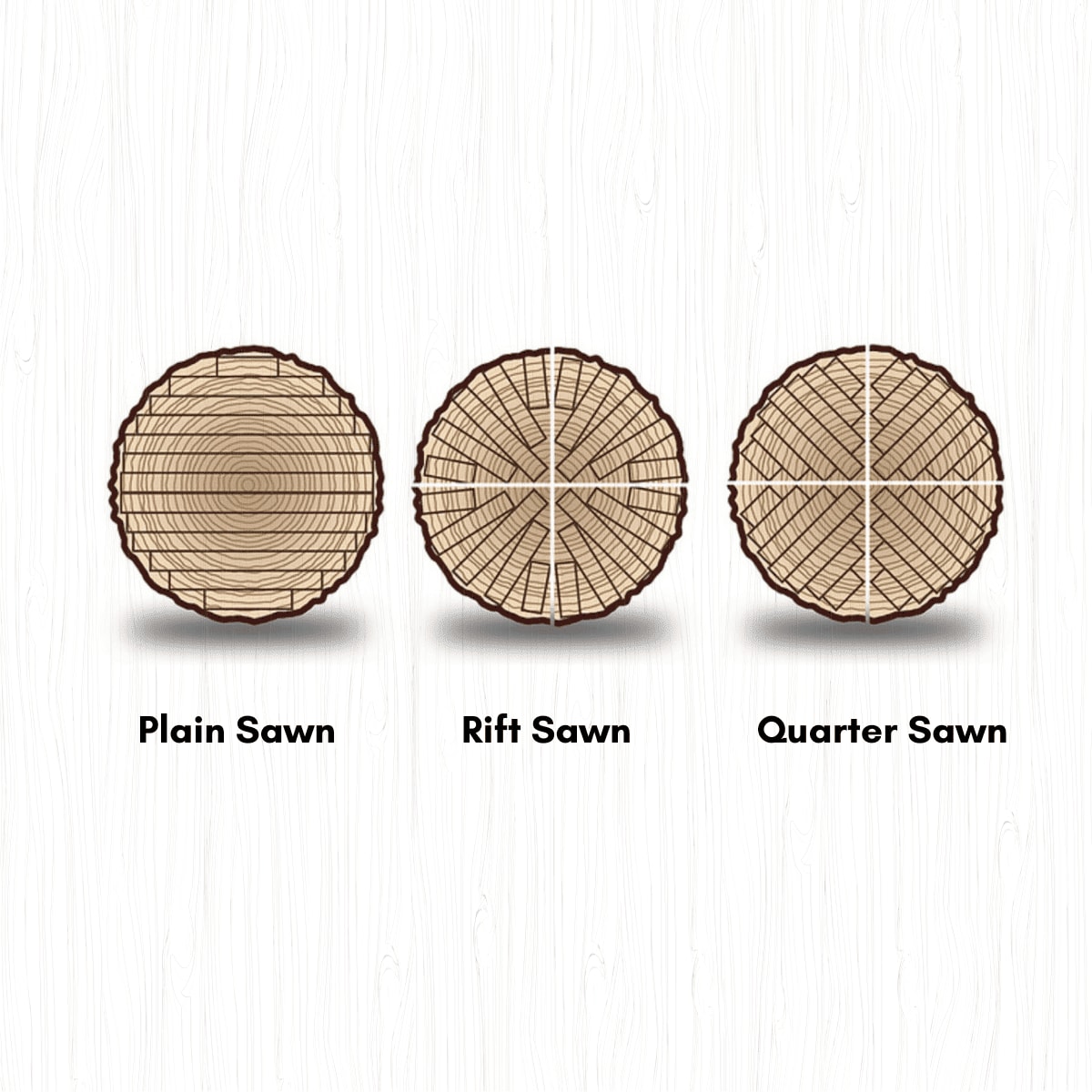
Plain sawn boards are cut from the log in strips parallel to the pith, the center where the growth rings are smallest, and then sawn lengthwise again. This method produces boards with distinctive, varied grain patterns and rich color variation.
Plain sawing is the most common and widely used cutting method.
Quarter Sawn
As the name suggests, the quarter sawing method begins by cutting the log into quarters. Boards are then sliced from the flat faces of each quarter, with cuts made at approximately a 90-degree angle to the growth rings. In the lumber industry, this is known as edge-grained wood.
Quarter sawn boards typically offer more uniform color and grain patterns. As cutting progresses toward the outer edges of the log, the angle of the growth rings shifts, resulting in rift sawn boards.
Rift Sawn
Rift sawn boards are produced by continuing to cut along the outer edges of a quartered log. What sets them apart from quarter sawn boards is the angle of the growth rings—rift sawn boards are cut at a more consistent, diagonal angle, typically between 30 and 60 degrees to the face of the board.
This technique results in a straight, linear grain on the surface, while the end grain appears slightly slanted. The uniformity of rift sawn veneer makes it a popular choice for clean, contemporary designs.
Veneer Matching
Veneer matching is the process of arranging thin slices of wood so that the grain flows in a visually cohesive way. The way these grain patterns are placed side-by-side or end-to-end within a panel or element like a cabinet door or drawer front has a significant impact on the final design.
To begin, veneer cutters slice a solid plank into extremely thin layers called leaves. These leaves are kept in order during production to maintain consistency in grain and color. A set of sequentially cut leaves from a single plank is known as a flitch. Since the grain and tone are most consistent within a single flitch, each one is carefully numbered and cataloged for accurate matching.

Book Matched
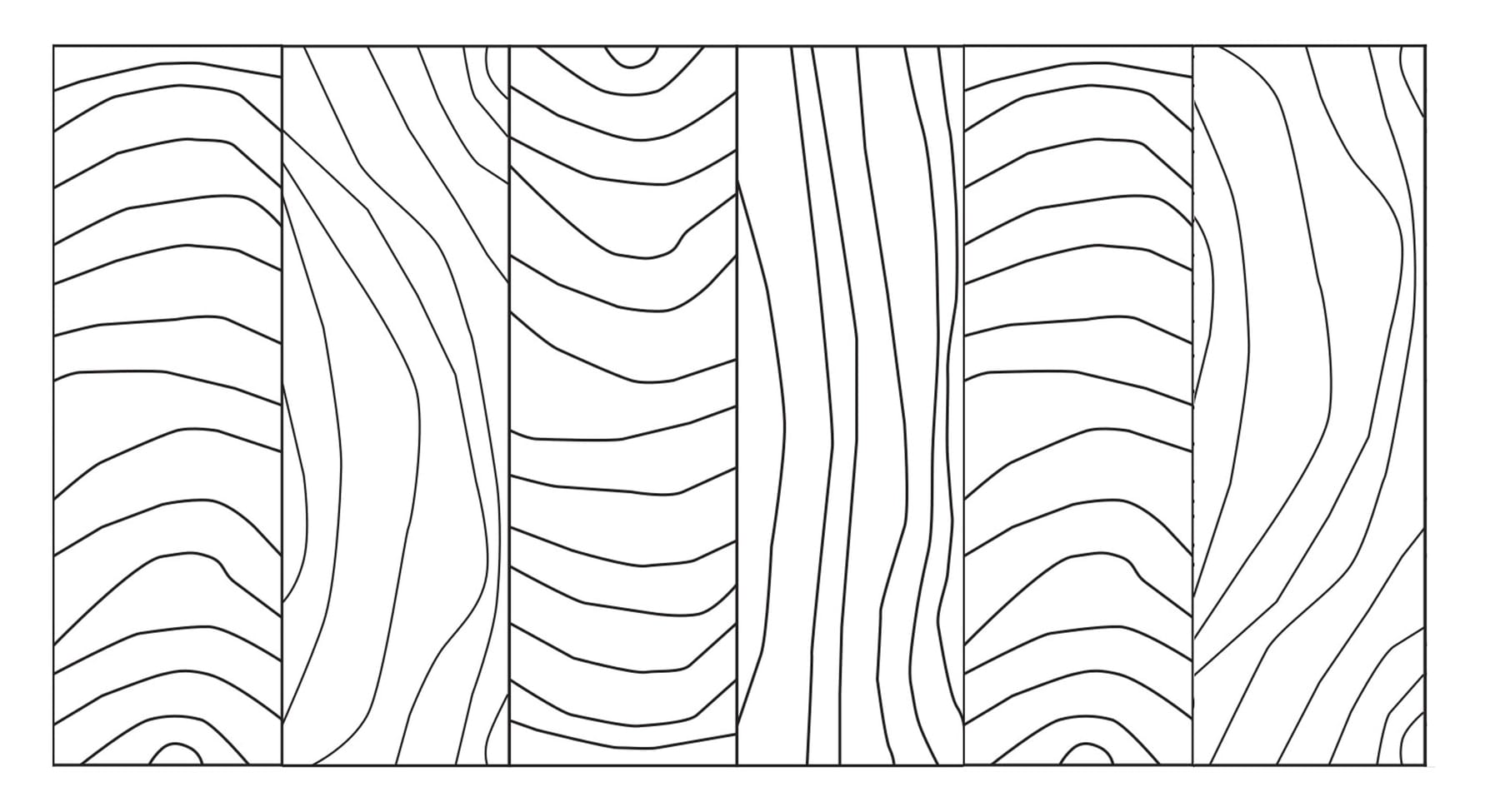
Book matched veneers are created by flipping every other veneer leaf to form a mirror image of the grain pattern. To visualize this, imagine a veneer artisan holding a flitch like a book: the first leaf is laid down, and the next is placed as if the book were opened, with the opposing faces laid side by side.
Depending on the species and the grain of the wood, this technique produces a symmetrical, often dramatic pattern. Book matching is the most common veneer matching method and can be used with plain sliced, quarter sliced, or rift sliced veneers.
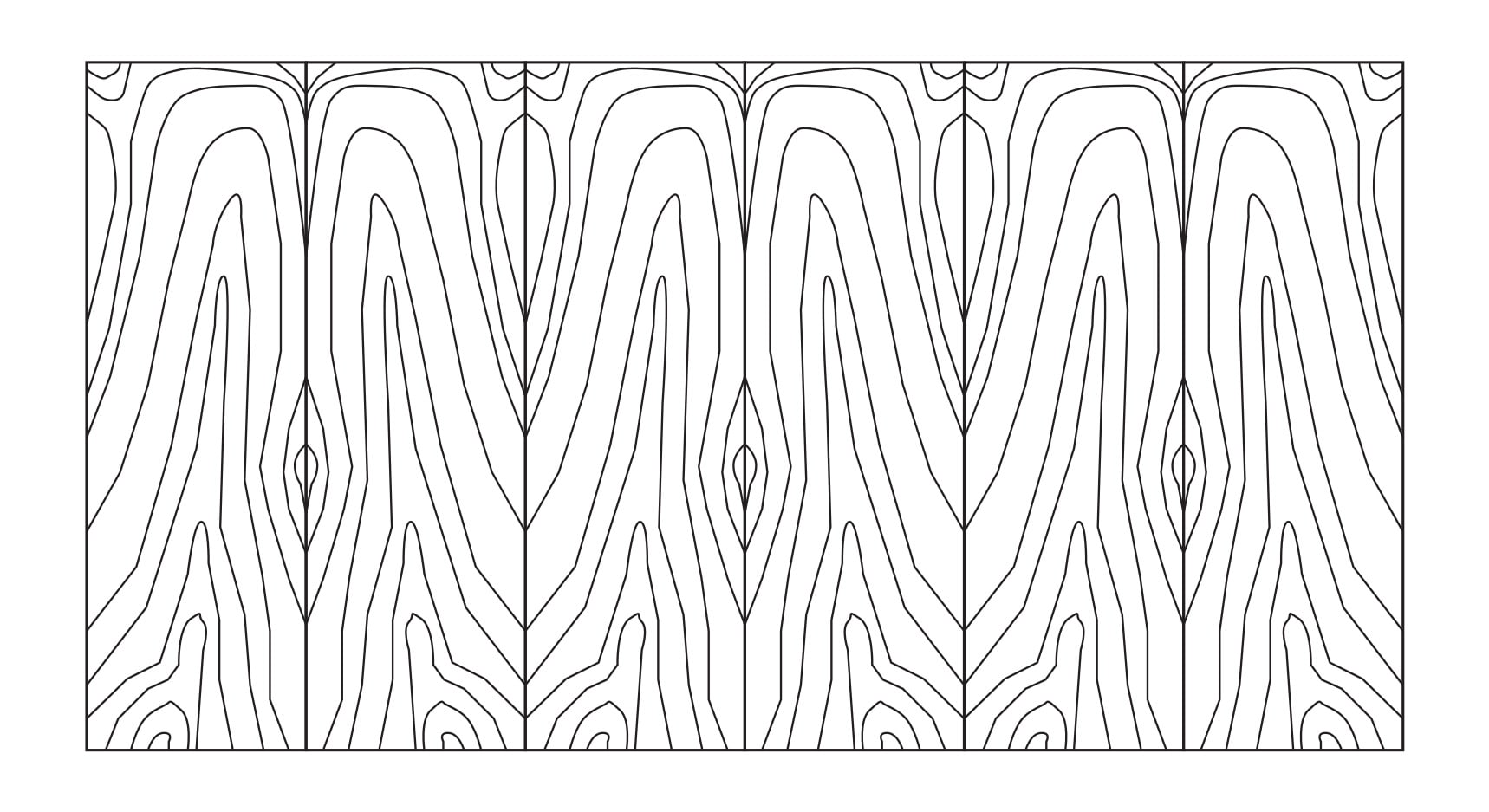
Book matching produces a more consistent, repeating grain pattern across panels, with less emphasis on matching at the joints. This method is seen by many as more aesthetically pleasing as it produces more movement, interest, and drama from the natural grains.

-

- Torino Aluminum Bronze | Noble Veneer Macassar Ebony | Taj Mahal Quartzite


-

- Vancouver smoked oak | Grigio Carnico limestone

Slip Matched
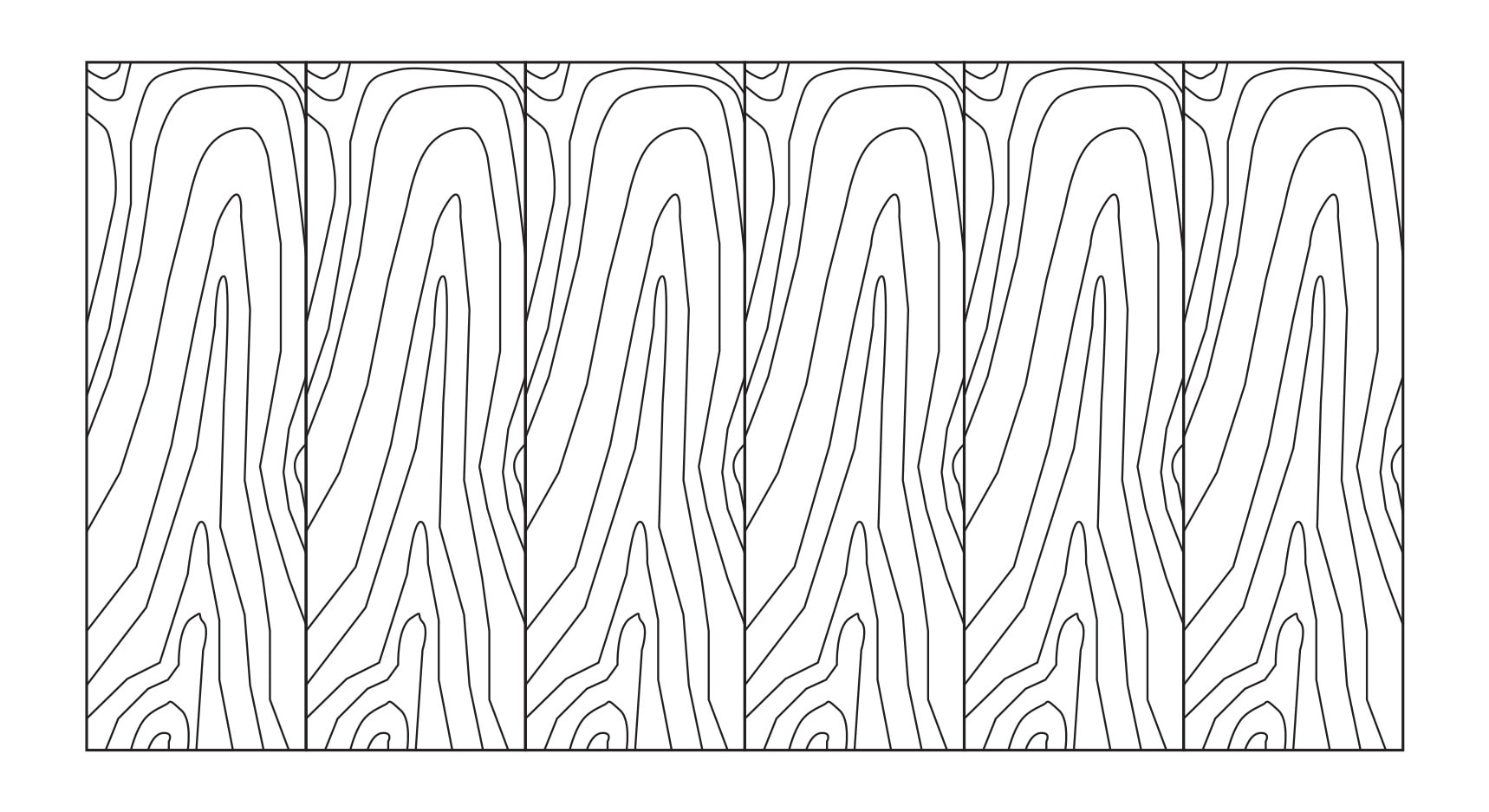
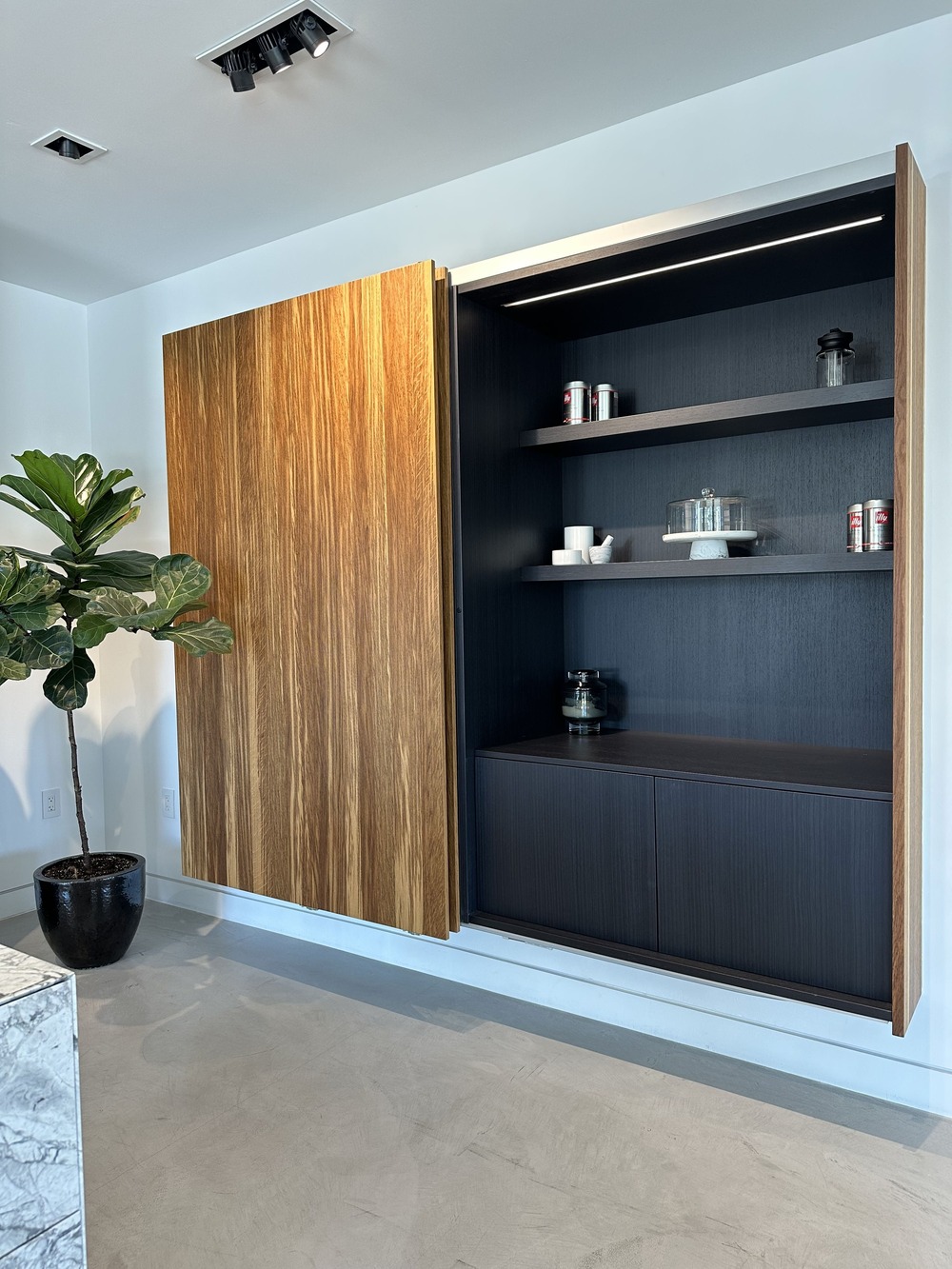
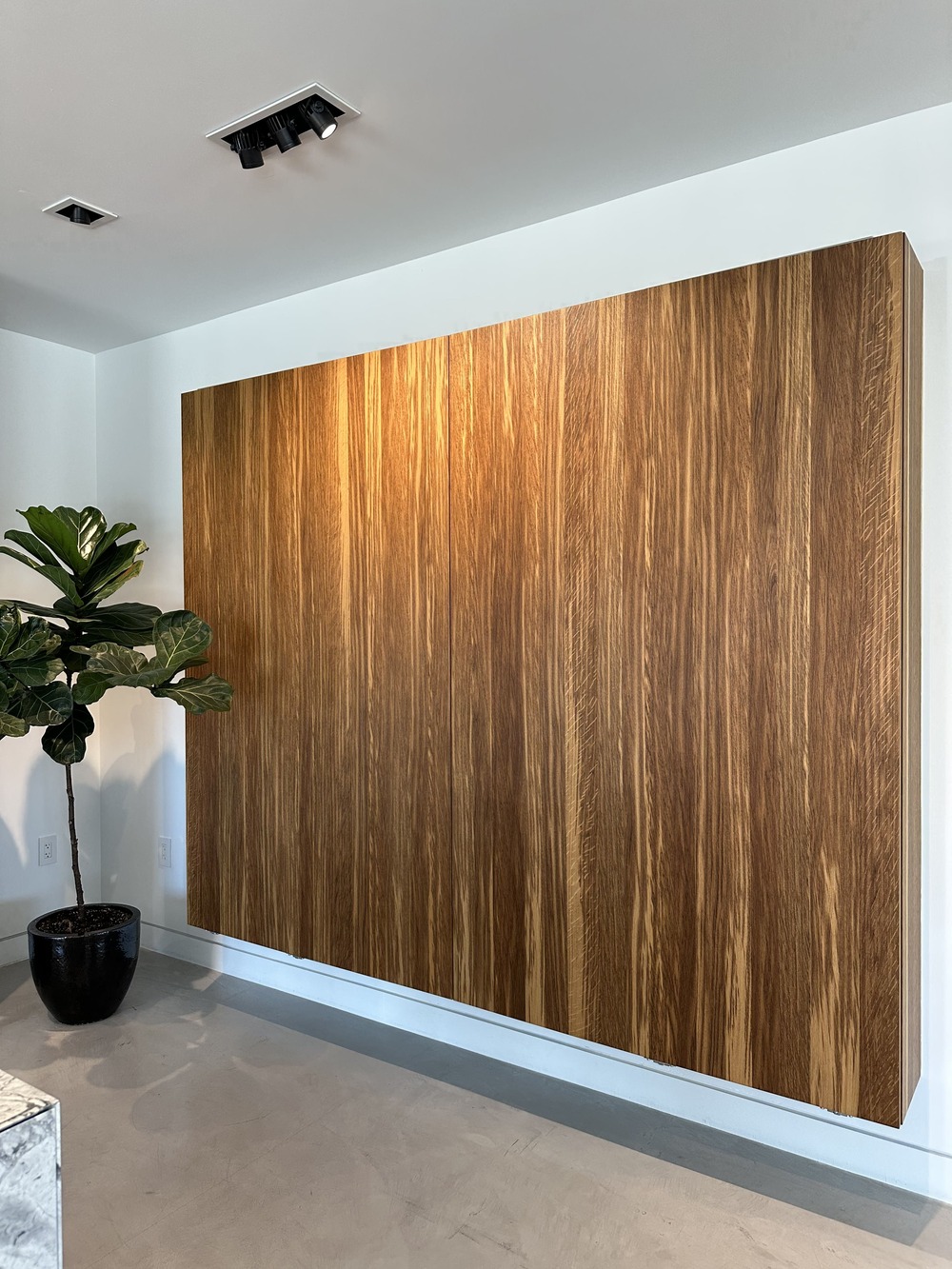
When slip matching, veneer artisans set veneer leaves side-by-side, joined in sequence without flipping the pattern. So rather than “opening a book” as done with book matching, the veneer leaves all have the same side face up. If the grain of the wood is straight and color uniform, joints will be imperceptible. Slip matched veneer is most often used with a quarter or a rift sliced veneers as these cuts offer more uniform narrow-striped grains.
Slip matching offers a less dramatic pattern, but provides a more uniform grain across panels. Minimizing grain variation at the joints is important in this matching technique.

-

- Phyllite Black Leather Quartz | Vancouver Oak Sandblasted
Pleasing Matched
Veneers are matched by color or grain similarity and arranged for artistic effect, resulting in a more natural, slightly random appearance. When using exotic or highly open grain patterns, this technique can be especially striking
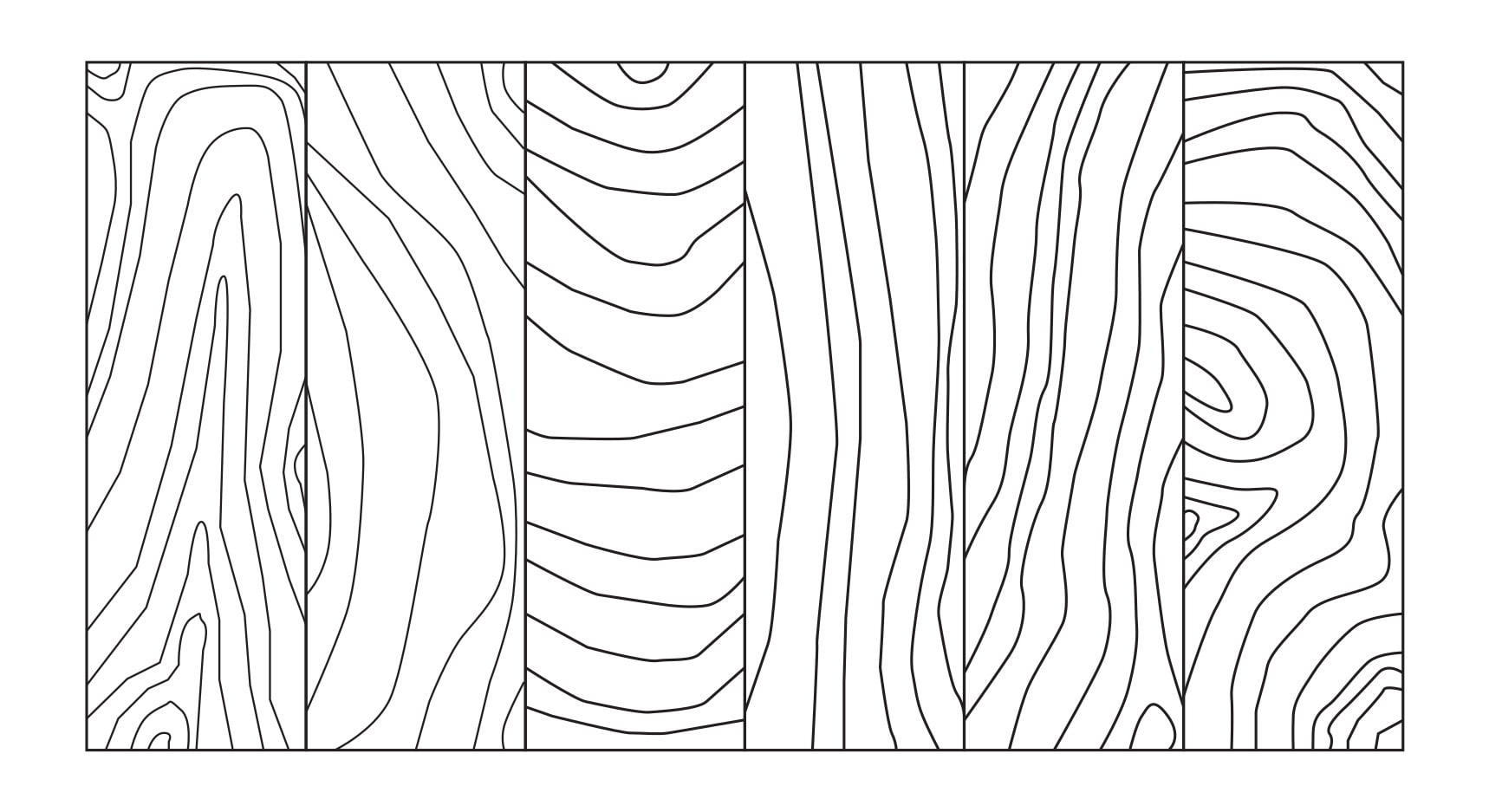
Random Matched
A bit of a misnomer as the grains are not matched, rather leaves are selected randomly from one or more flitches and placed to produce an appearance of boards.
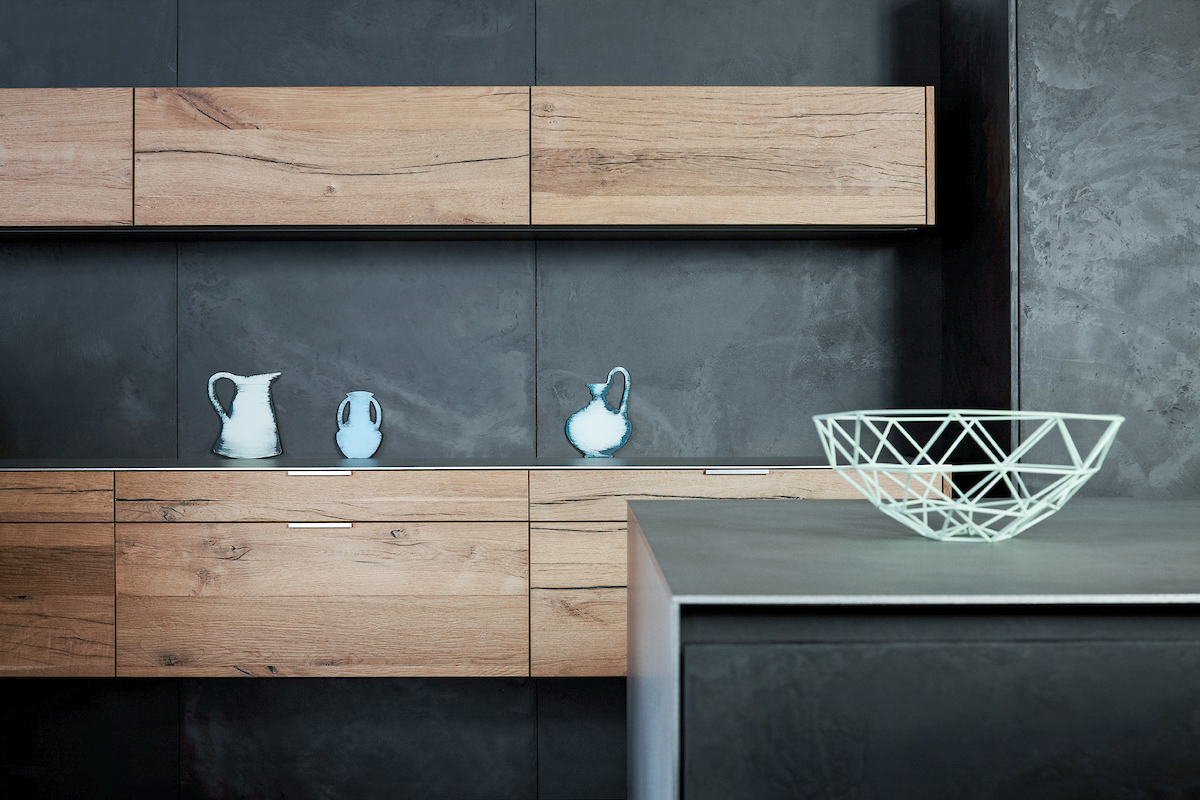
This technique is usually used with lower grade veneers allowing knots and produces a casual, rustic aesthetic.
-

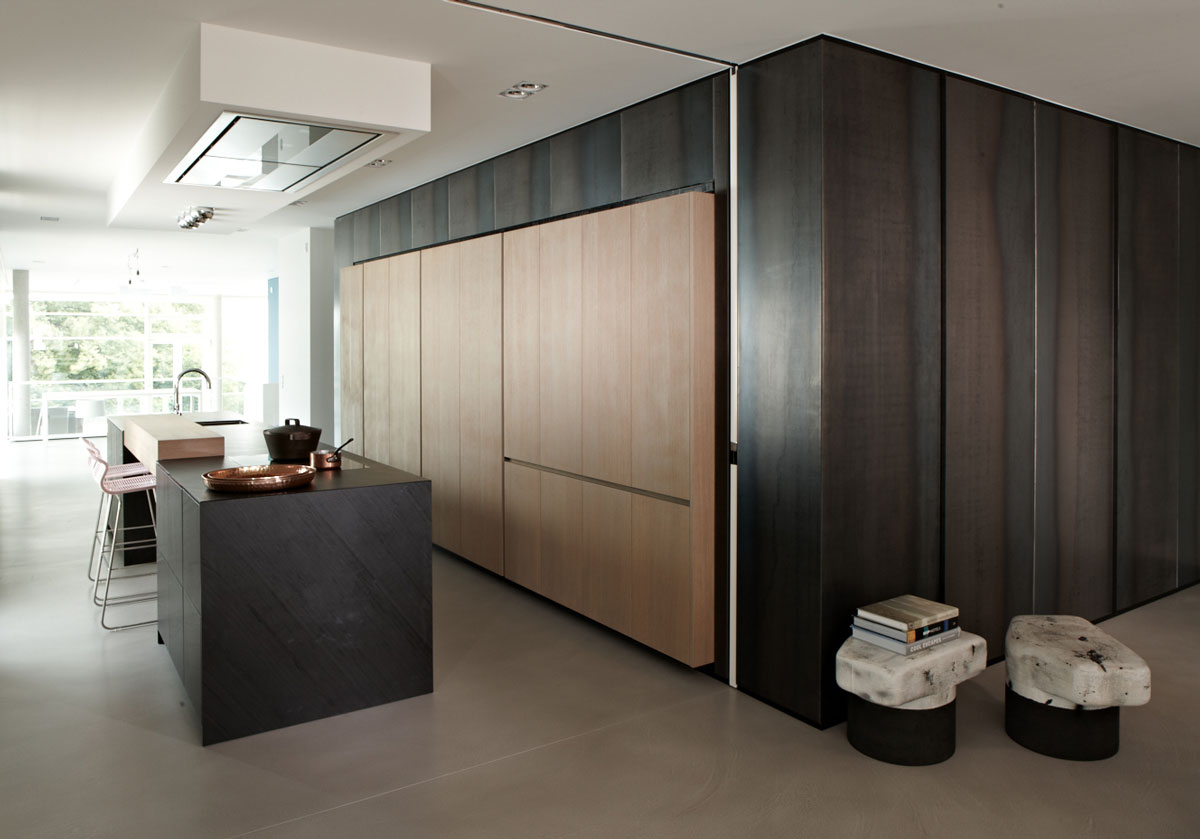
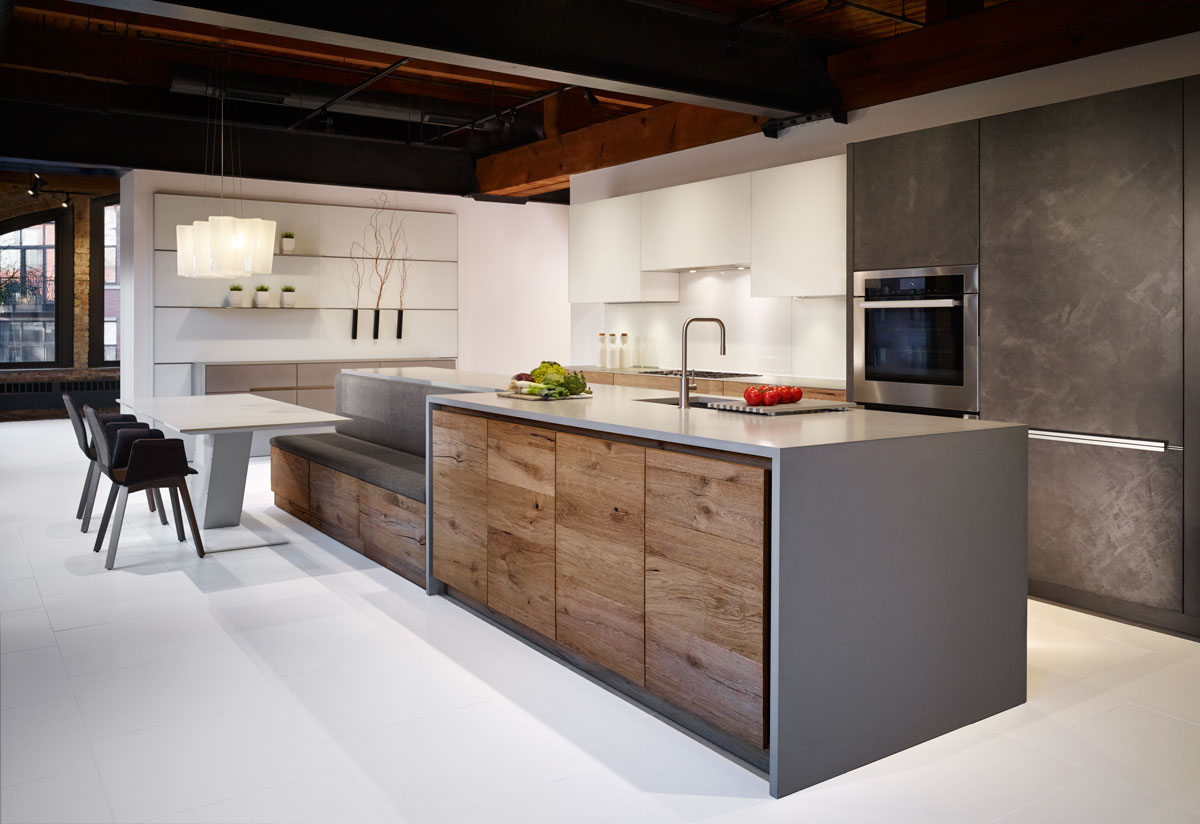
- unique eggersmann kitchen with concrete and silvertouch kitchen, eggersmann factory live on stage

Panel Face Matching
Matching veneers on a single cabinet or furniture piece requires precision and artistry. However, continuing that grain alignment across a full wall or an entire room of cabinetry is a much more complex task. It takes years of veneer planning experience to execute successfully.
The process begins with your eggersmann designer, who creates a detailed grain-matching plan tailored to the space. This ensures the natural flow of the wood grain carries through from panel to panel.
Once the plan is finalized, our veneer artisans carefully execute it by numbering and organizing each veneer leaf with precision. Since the width of individual flitch leaves can vary as slicing progresses, the number of leaves used per panel may change throughout the process.
When adjacent panels need to align, our team applies advanced matching techniques to achieve a cohesive and visually balanced result across the cabinetry.

The various panel face matching techniques include:
- Sequence Match – the contiguous a set of veneer leaves across flitches produced from the same log. Careful selection of the collection of veneer flitches is required to ensure that enough closely matched grains are available for the entire project and that grains and color match throughout the log.
- Center Match – Each panel features a veneer joint in the center of the panel and utilizes an even number of veneer leaves of uniform width. This method offers horizontal symmetry for each cabinet or drawer unit. This method produces more waste from a flitch as the excess sides are trimmed.
- Balance Match – Each panel face is assembled from leaves of uniform width. This is usually the most aesthetically pleasing ensuring that each component such as cabinet door or drawer front matches the one next to it. This requires careful selection of the flitches prior to planning the adjacent surfaces for a room.
- Running Match – Each panel face is assembled using the number of leaves required to cover the panel width. Any leftover portion from the last leaf may be used as the start of the next panel so that though individual doors and drawer do not match, the grain or pattern matches continuous across the surface such as a bank of cabinets or a wall.
Artistic Veneers
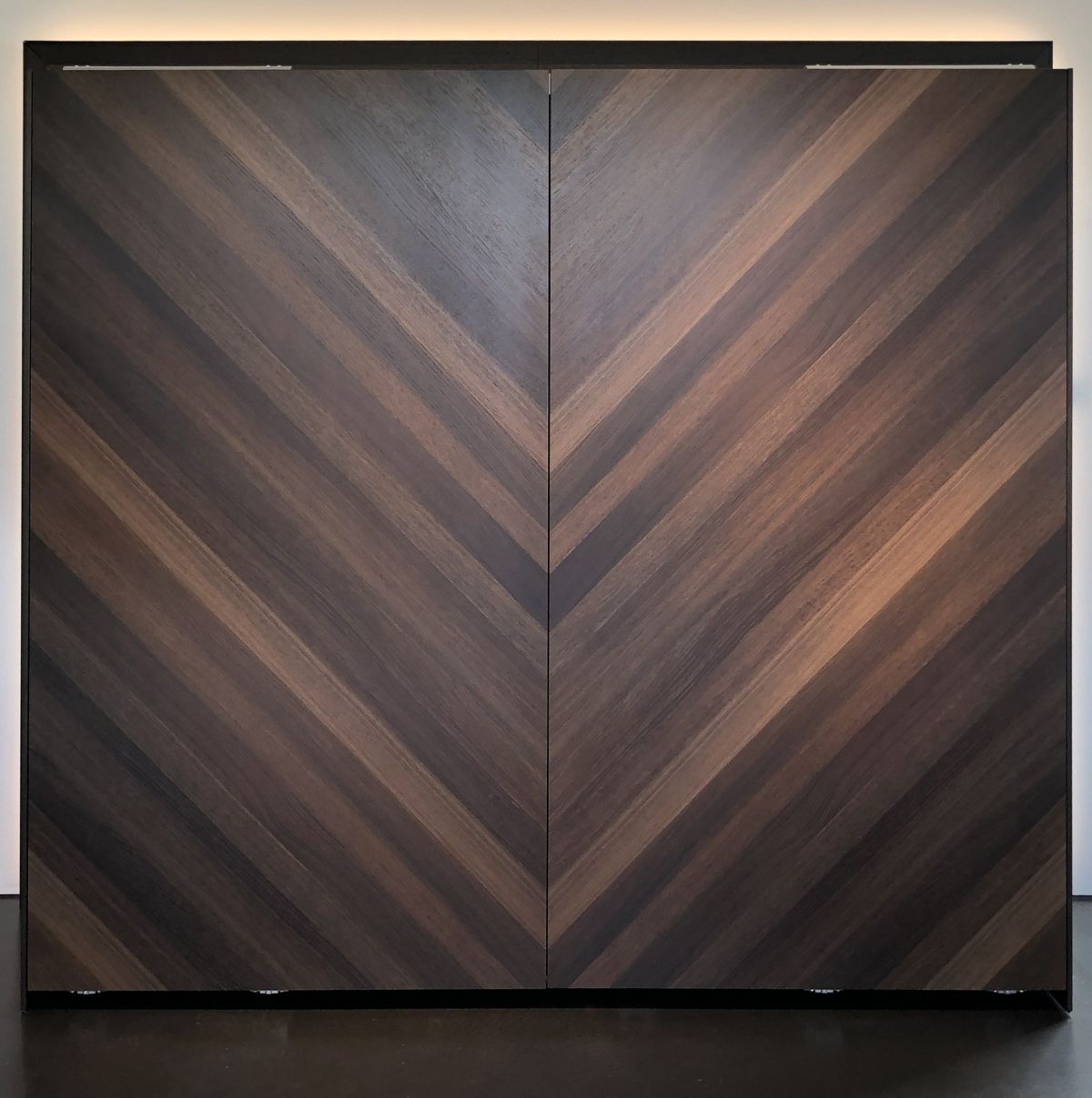
For select projects, architects and designers may specify specialty patterned veneers such as diamond match, chevron, herringbone, sunburst, and others.
These artistic veneer patterns are typically used as statement features on doors, wall panels, or focal elements within a space. They are crafted using the same stitching or gluing techniques but require greater precision to achieve their intricate designs. Often, multiple wood species are combined to create a rich, inlaid effect.



Classic Wood Veneers
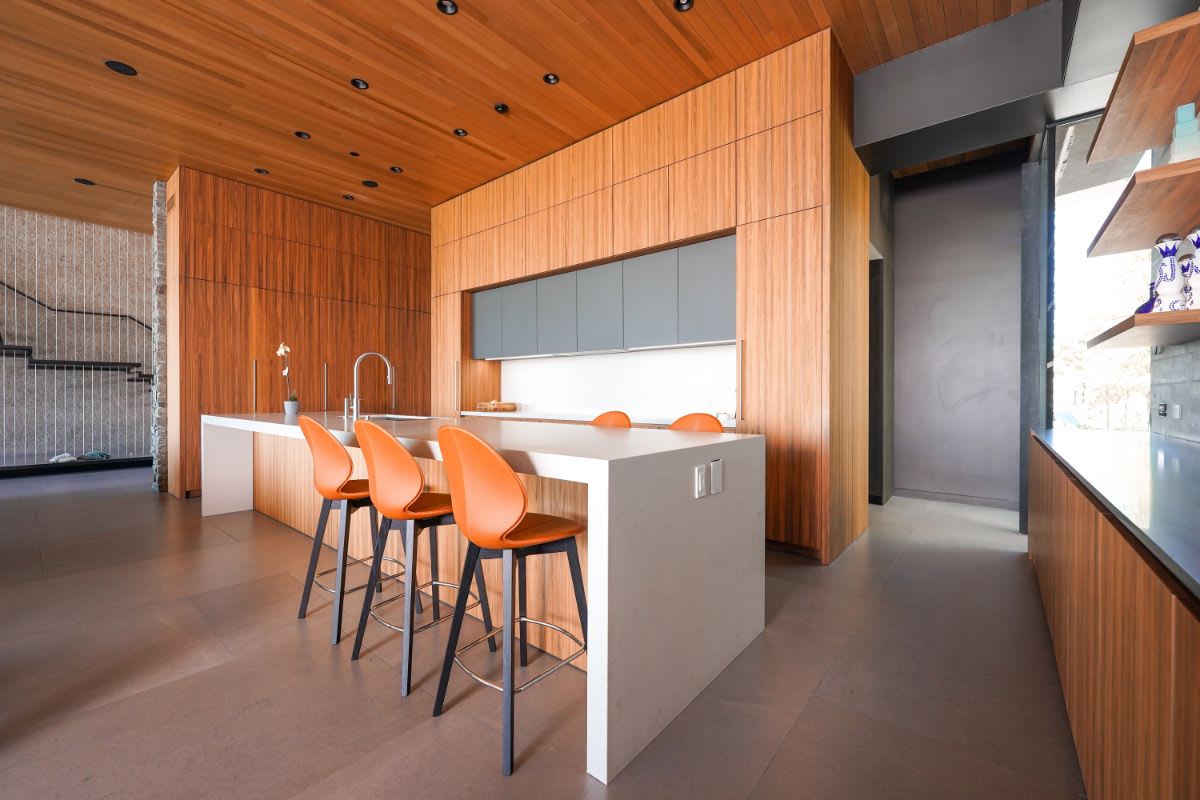
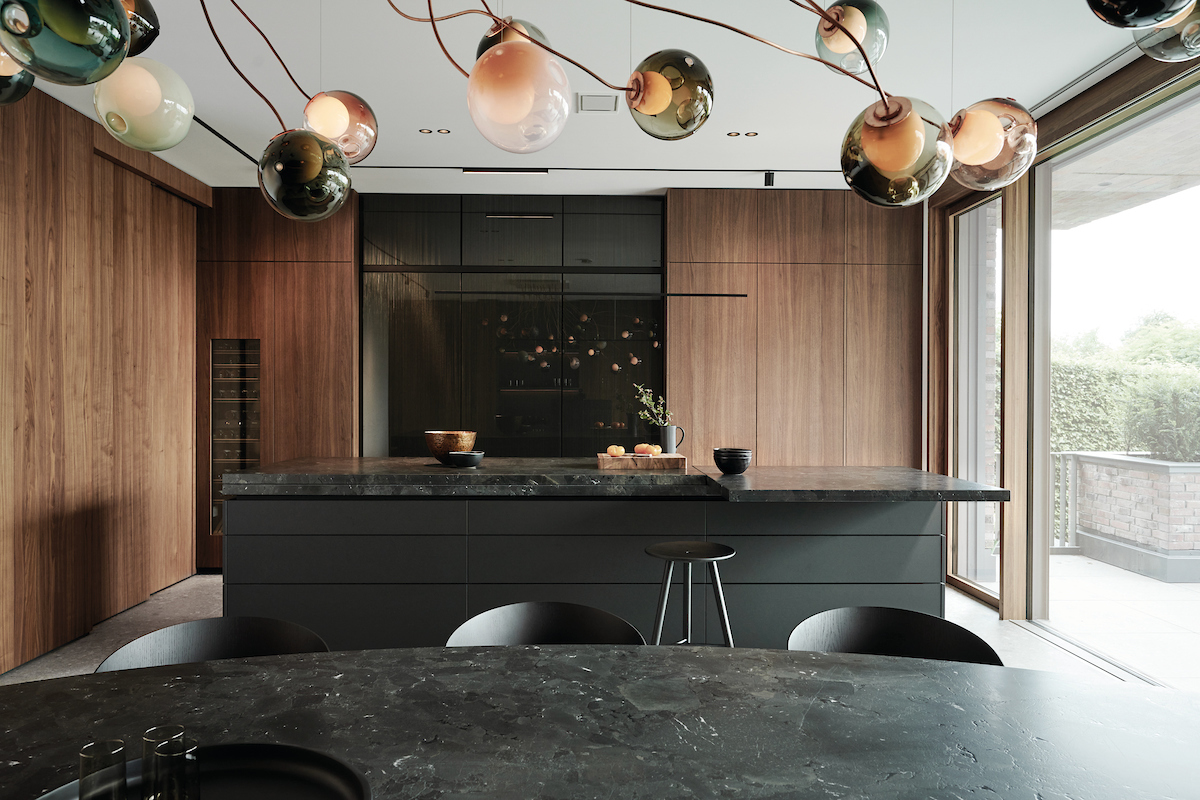
We offer design favorites such as oak, walnut, wenge, and ash. Visit an eggersmann showroom near you to experience the variety of wood veneer finishes.
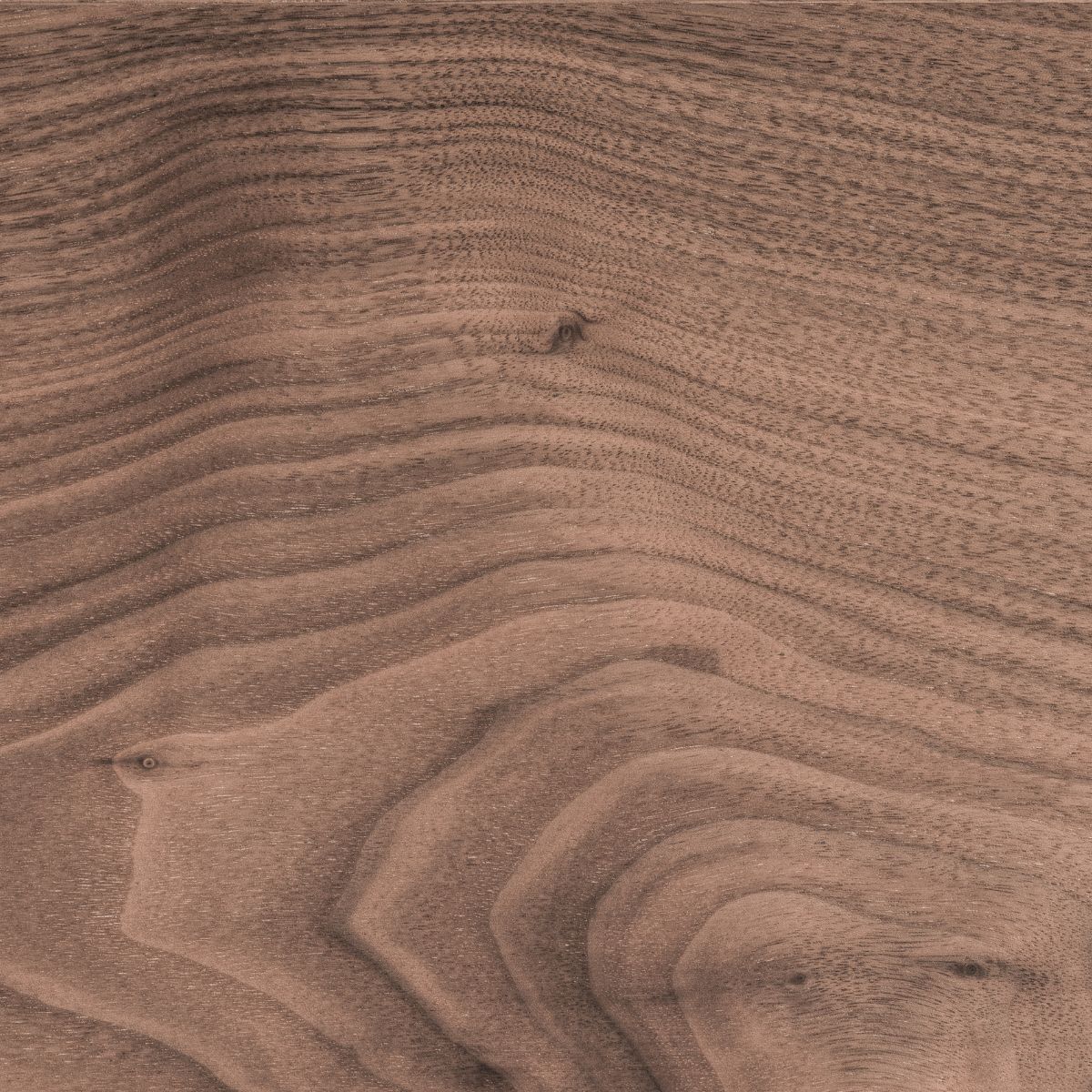
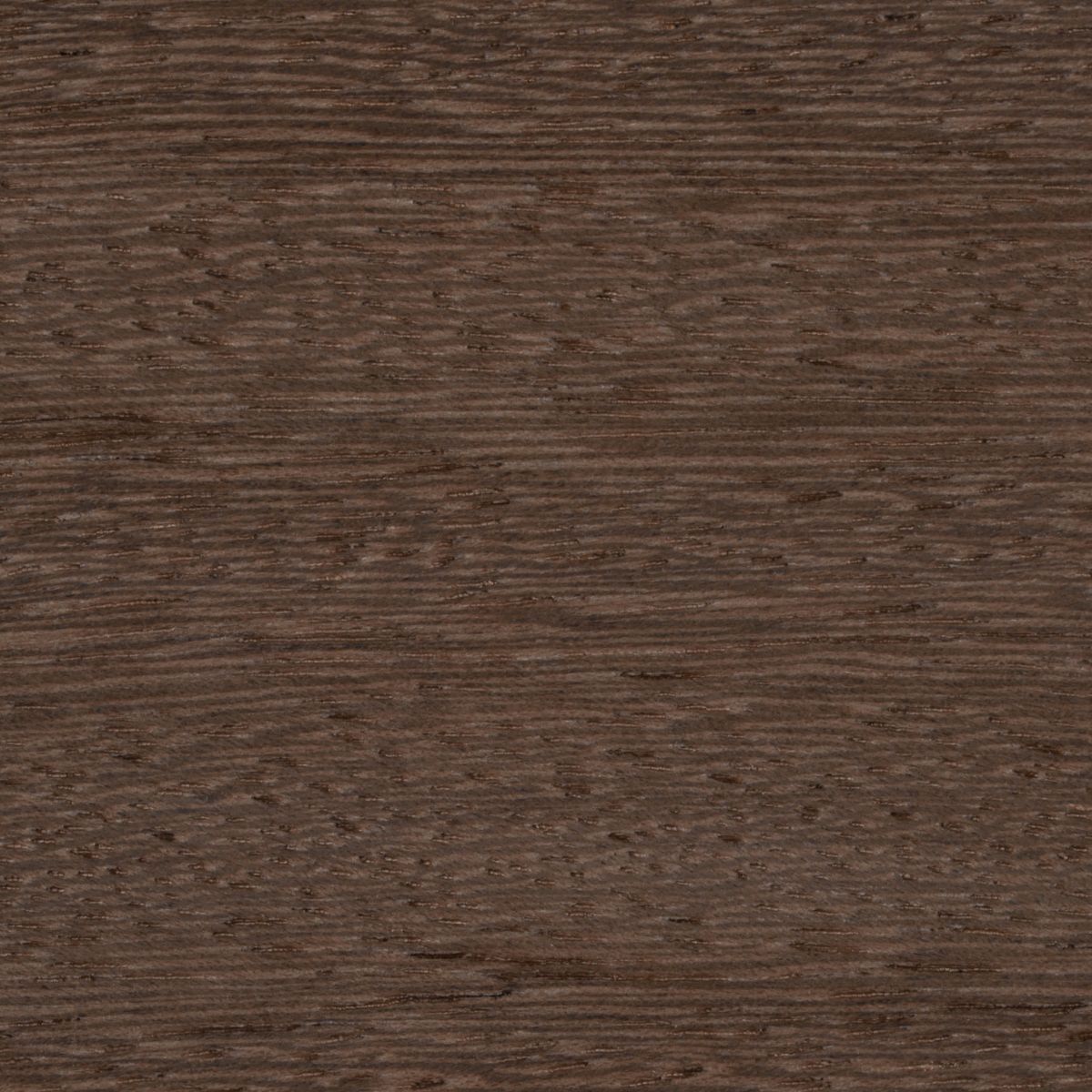
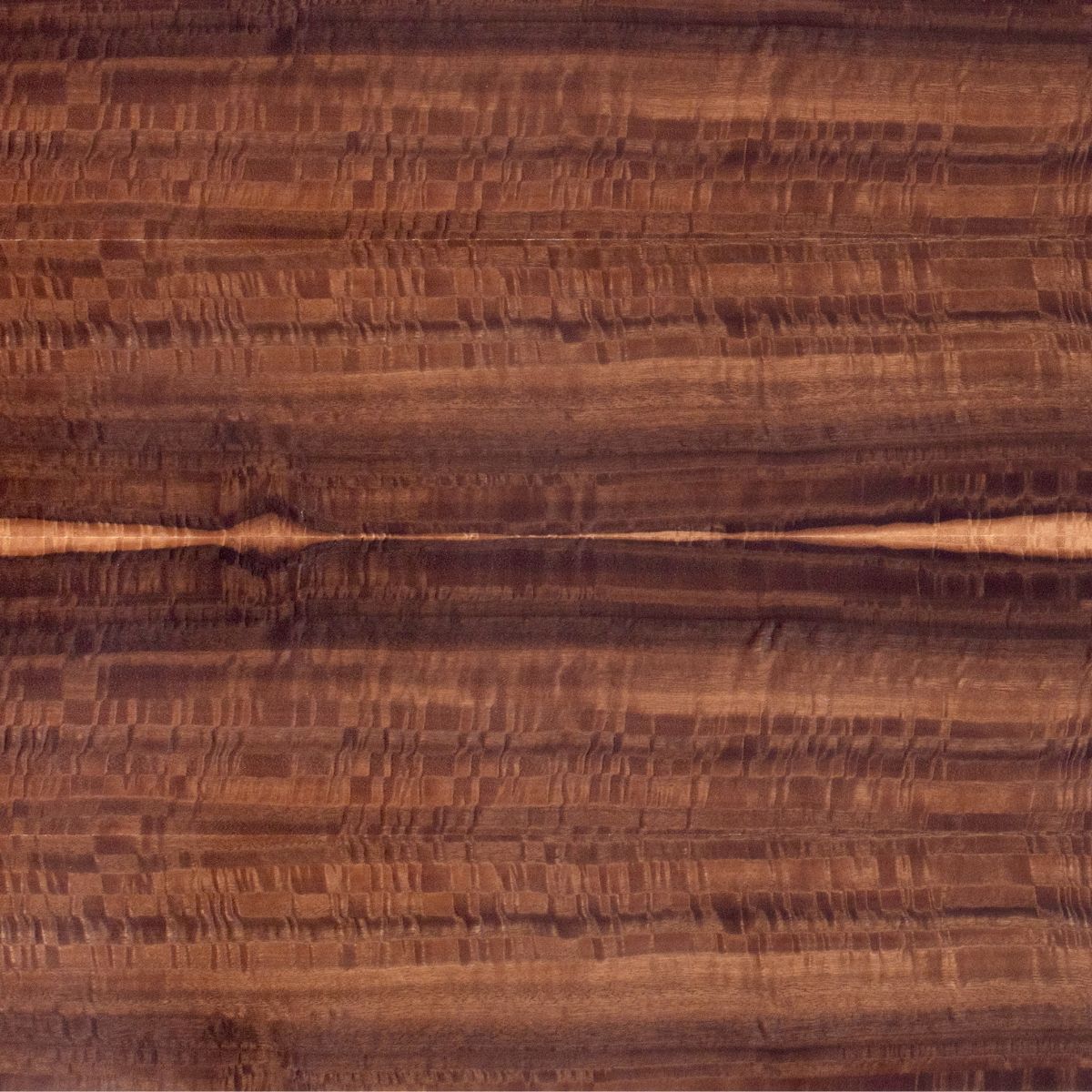
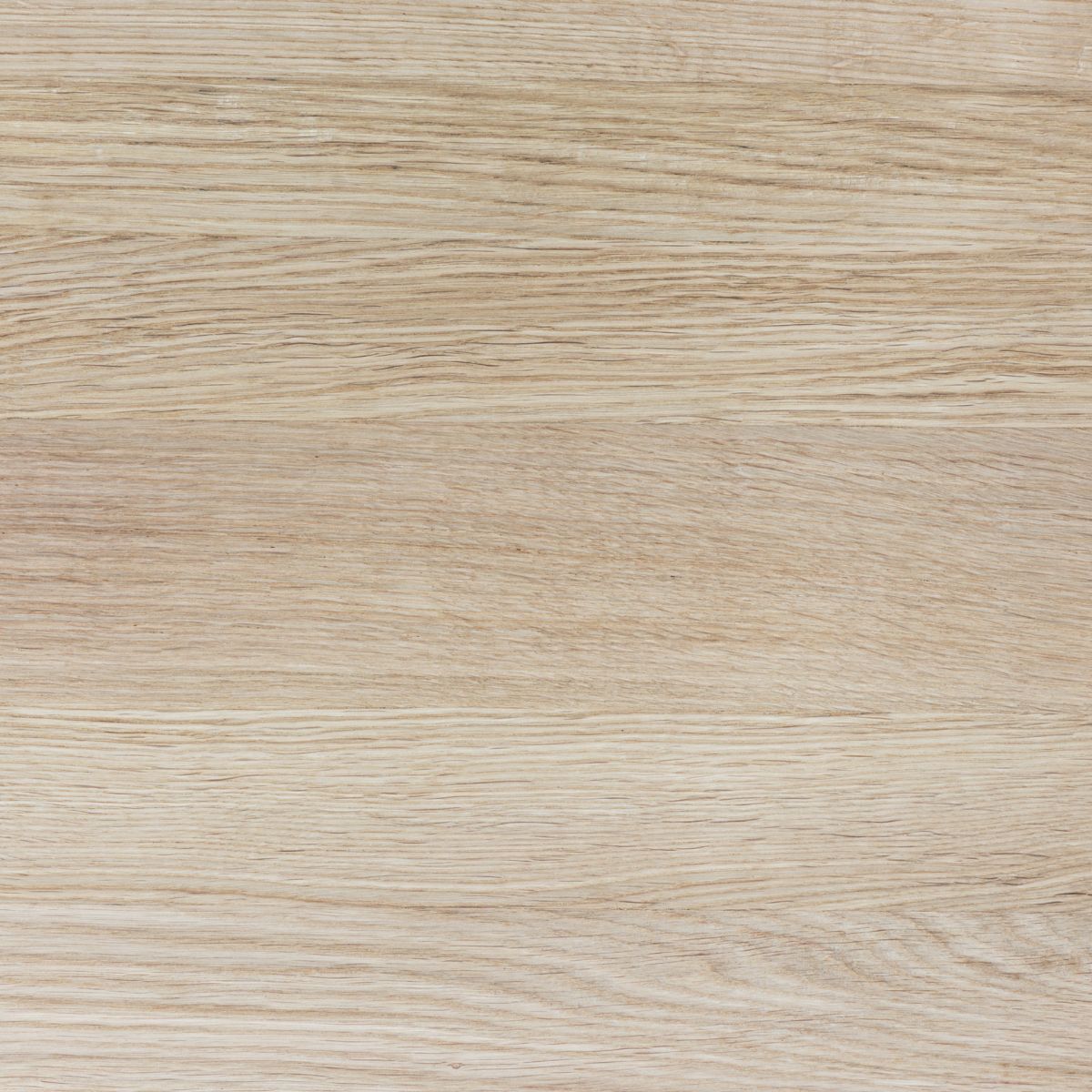
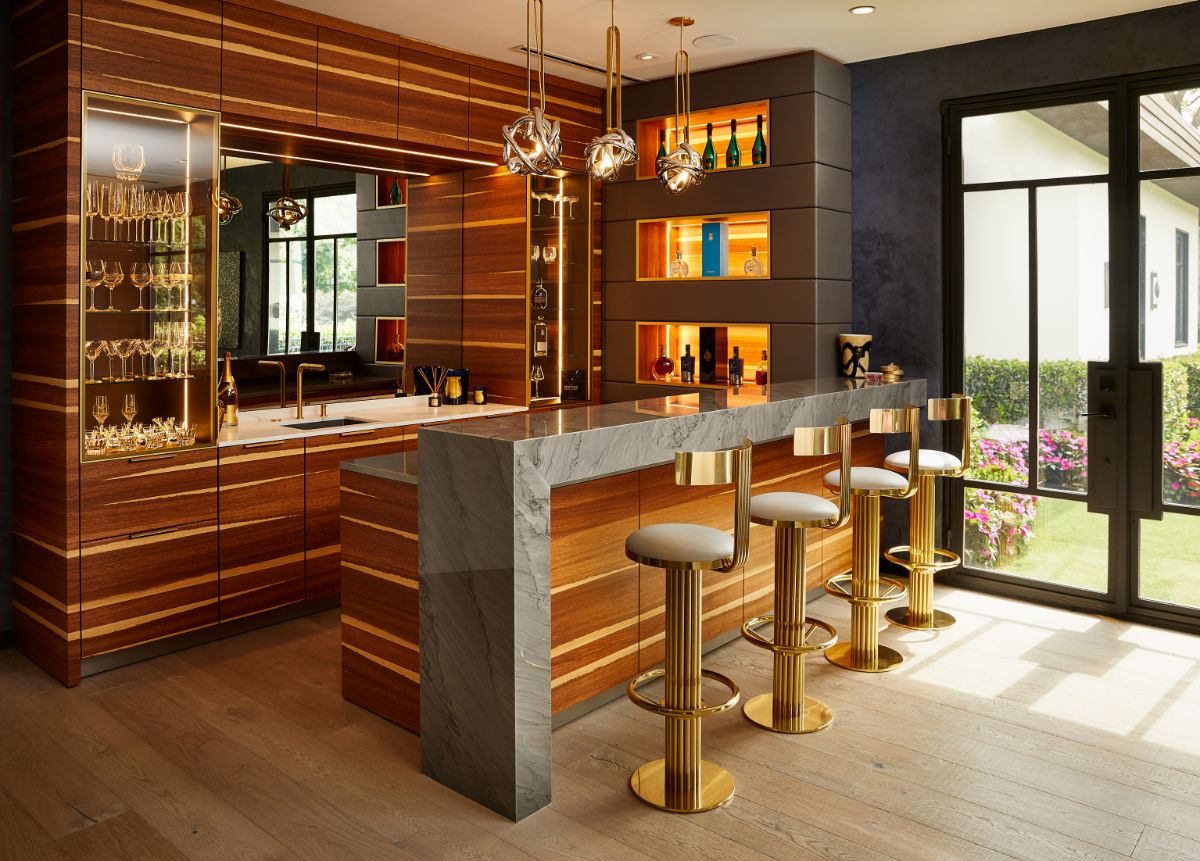
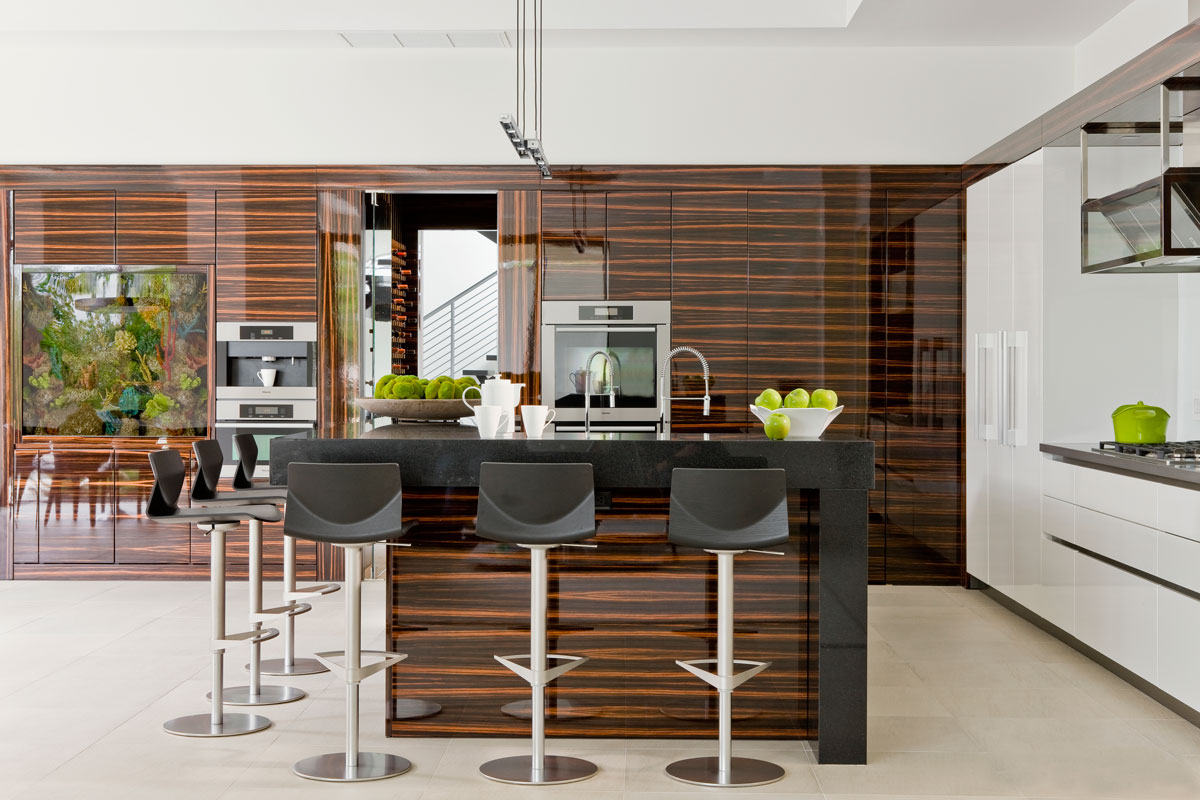
We offer classic wood veneers in traditional finishes as well as in smoked and fumed finishes. We also offer exotic wood veneers in our Noble collection such as macassar, eucalyptus, palisander (rosewood), and specialty oaks and walnuts.
-
- An E-sign kitchen by eggersmann GmbH featuring work’s turnstile pantries, motion sliding worktops and hidden door.
-

- Eucalyptus | Water Jet Nero Assoluto Granite

Our wood veneers are offered in Matt, Satin, and High Gloss finishes.
3-D Wood Veneers
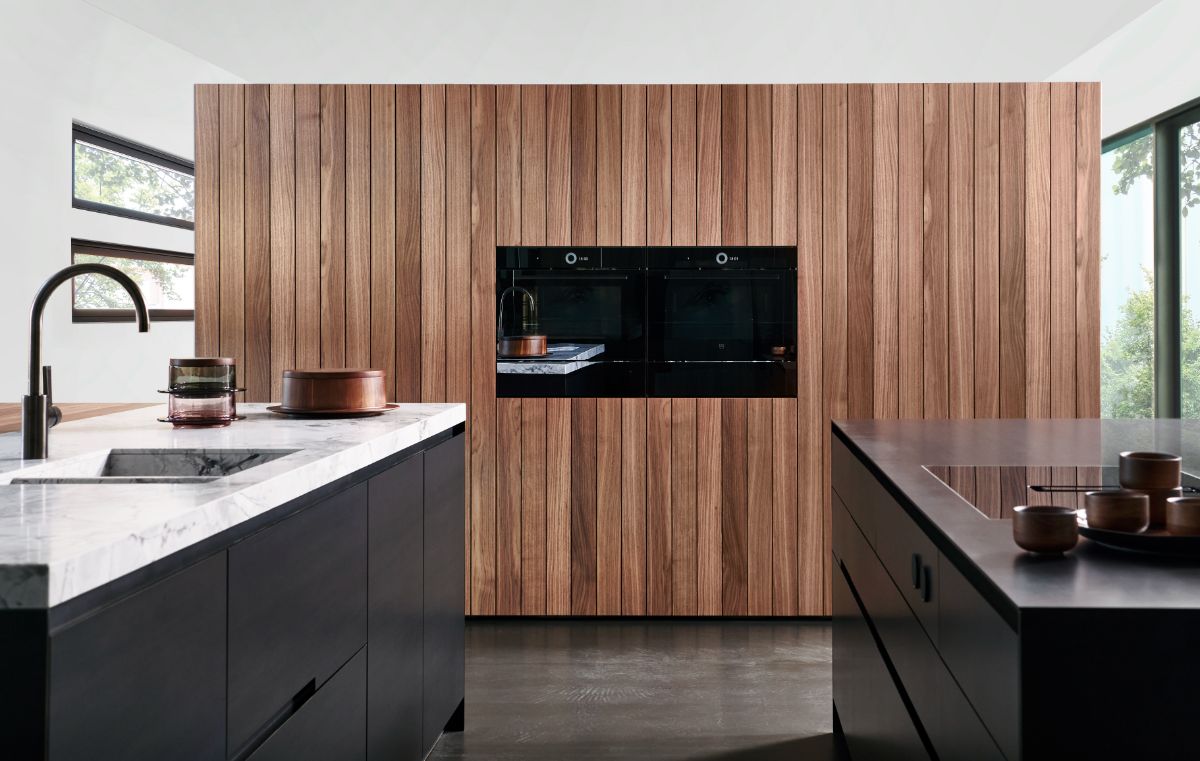
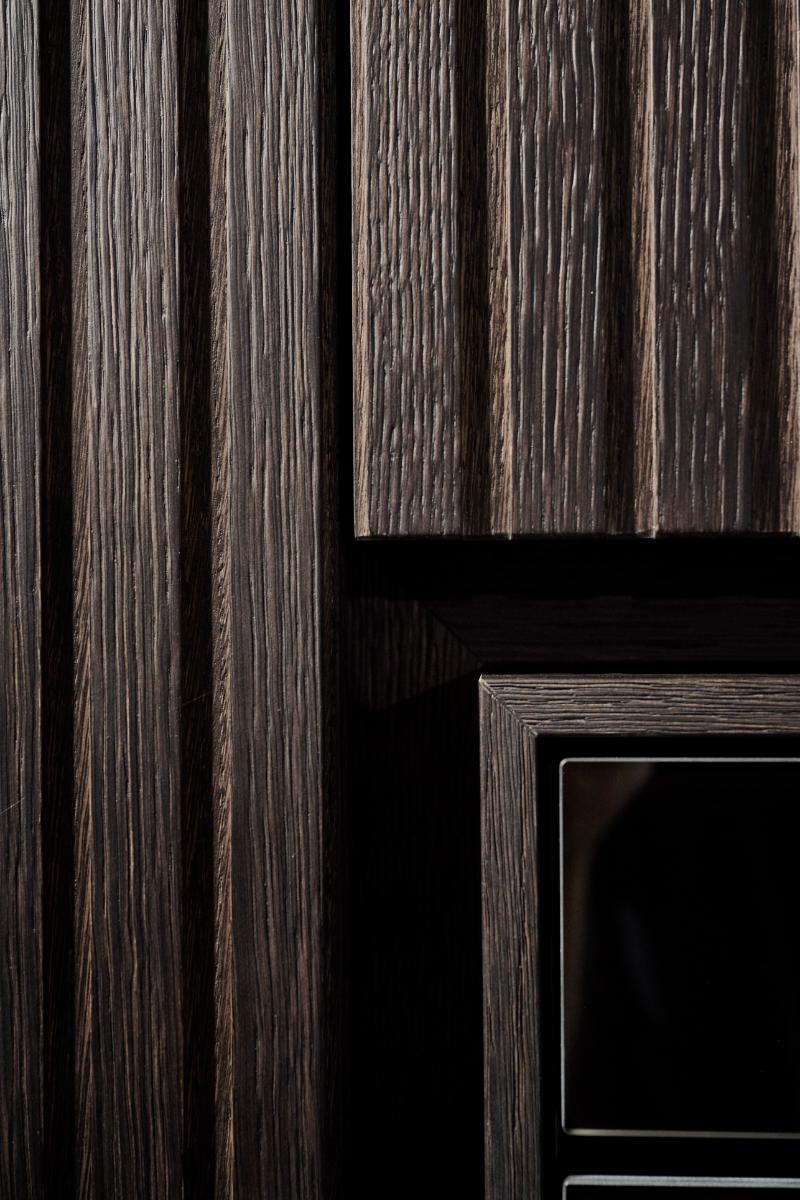
Classic wood veneers are a beautiful addition to your German cabinetry, but we go a step further with innovative 3-D veneers. These inventive finishes are tactile and add textural interest to cabinetry. Our textural three-dimensional wood veneers include:
- Ontario – plank-style grooved wood veneer
- lausanne – tambour-style in which relatively narrow symmetrical grooves are uniformly cut
- OSAKA – a reverse tambour vertical linear wood veneer in which the smaller dimension is a strip of wood applied to a veneer panel creating a wider dimensional gap.

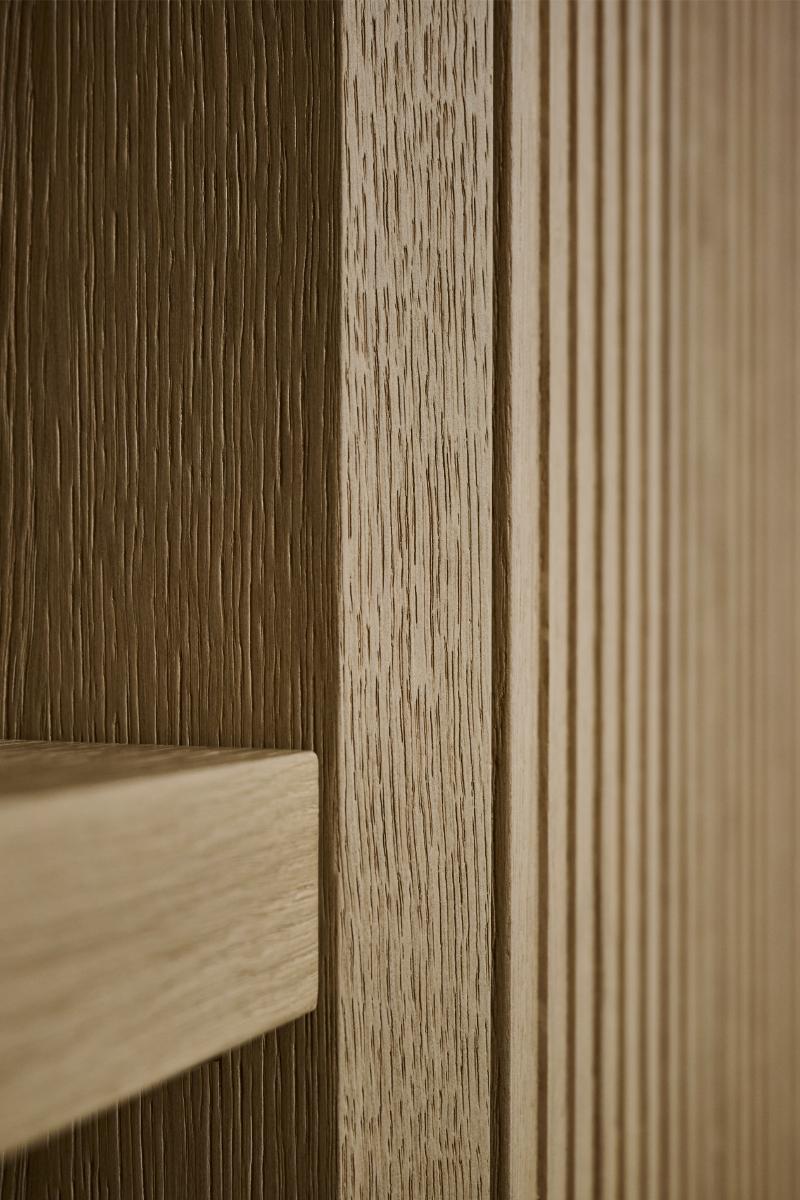


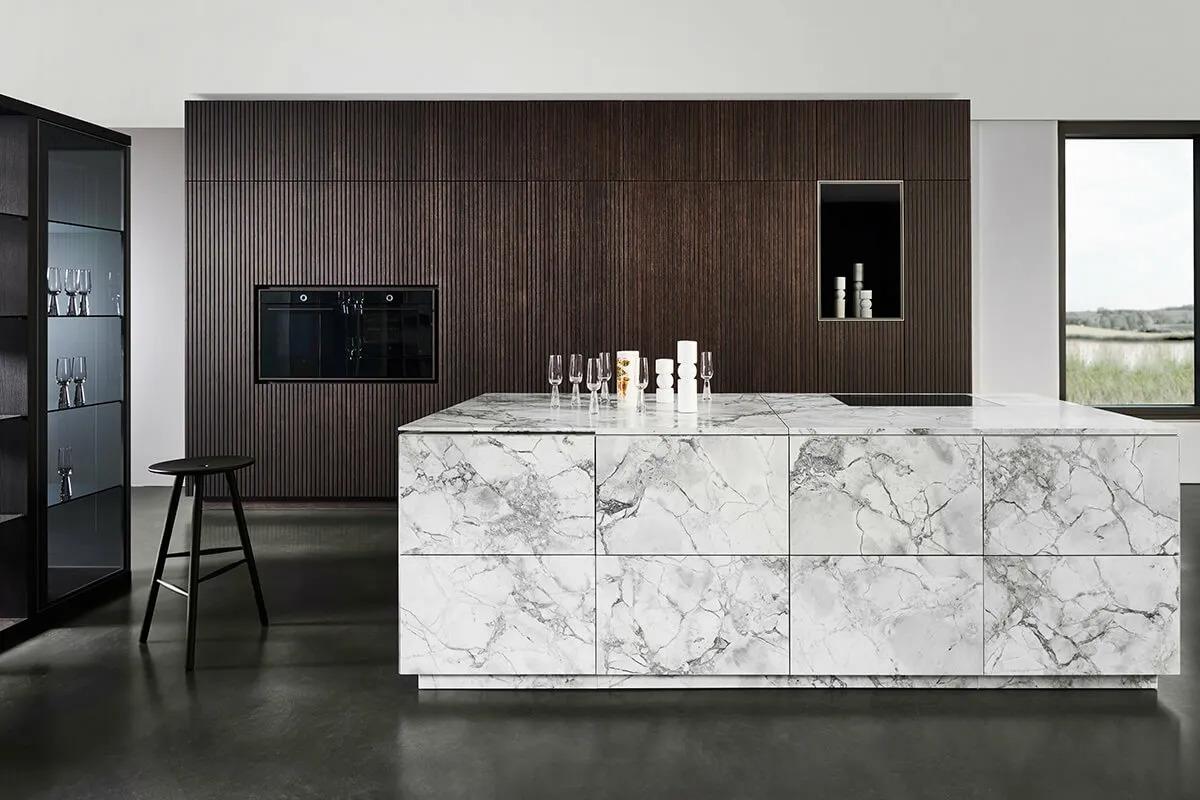
Love the vertically-grooved look but not the wood grain? Take a look at our tamboured-style satin lacquered fronts in any color you wish.
Wood Veneer Artisans
Our veneering process begins with sourcing flitches from across the globe.
Each region and, in fact, each tree varies, so logs must be sourced carefully to ensure that the quality and overall appearance remain consistent within a design project, among projects, and over years of production.
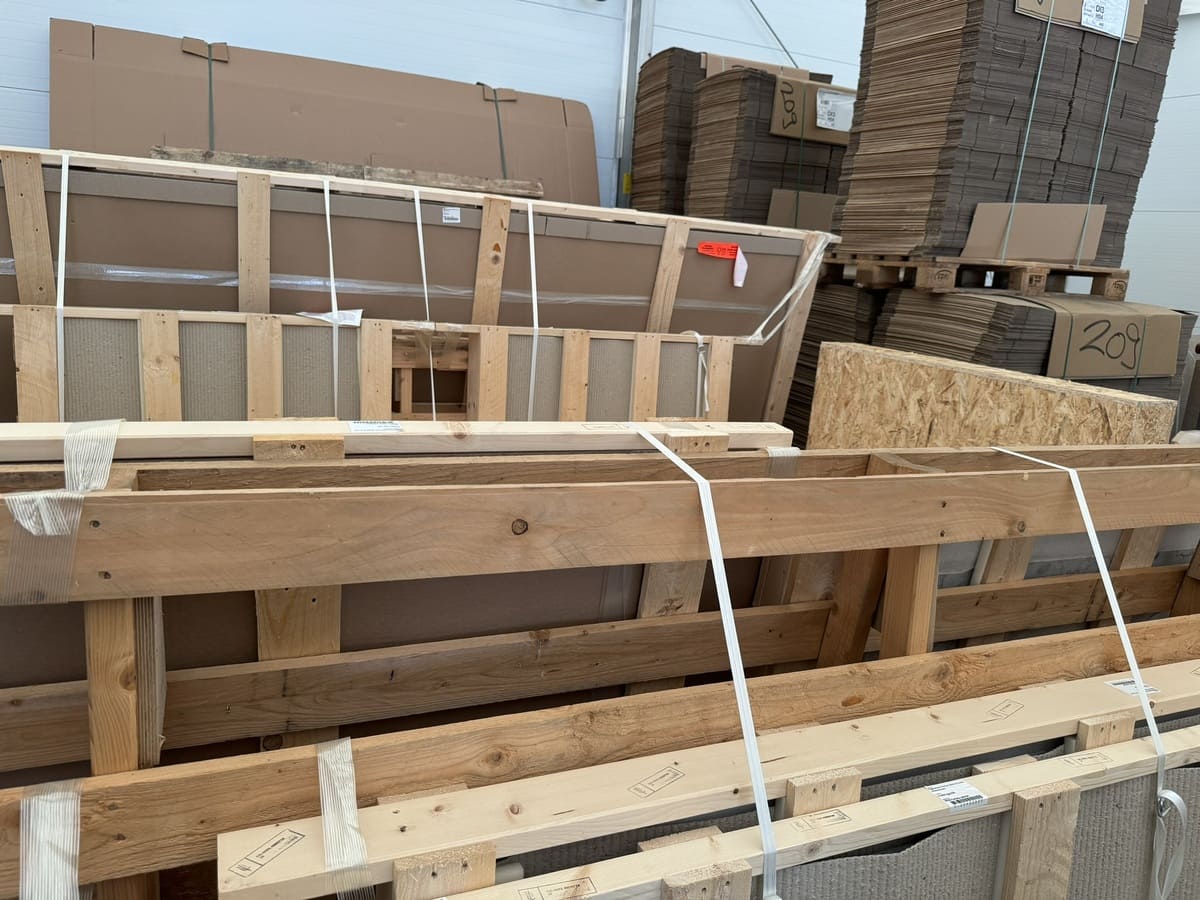
When the veneers arrive, often in multiple pallets, the veneer artisans carefully inspect and count each set of bundles then catalog them into inventory for a future design project.
Our veneer artisans plan meticulously to match across an entire room’s cabinetry plan, then set each panel by hand. In our diverse veneer processes, each project is factory-crafted combining old-world craftsmanship and state-of-the-art machinery for the highest quality veneers.
High-tech machines are utilized for edge-cutting of the veneer flitches as well as for sewing or gluing veneer leaves. But the trained eyes and skilled hands of our veneer artisans match grains according to the overall plan for a flawless cabinetry project. Then they adeptly ensure perfect seams using glue threads or edge-gluing.

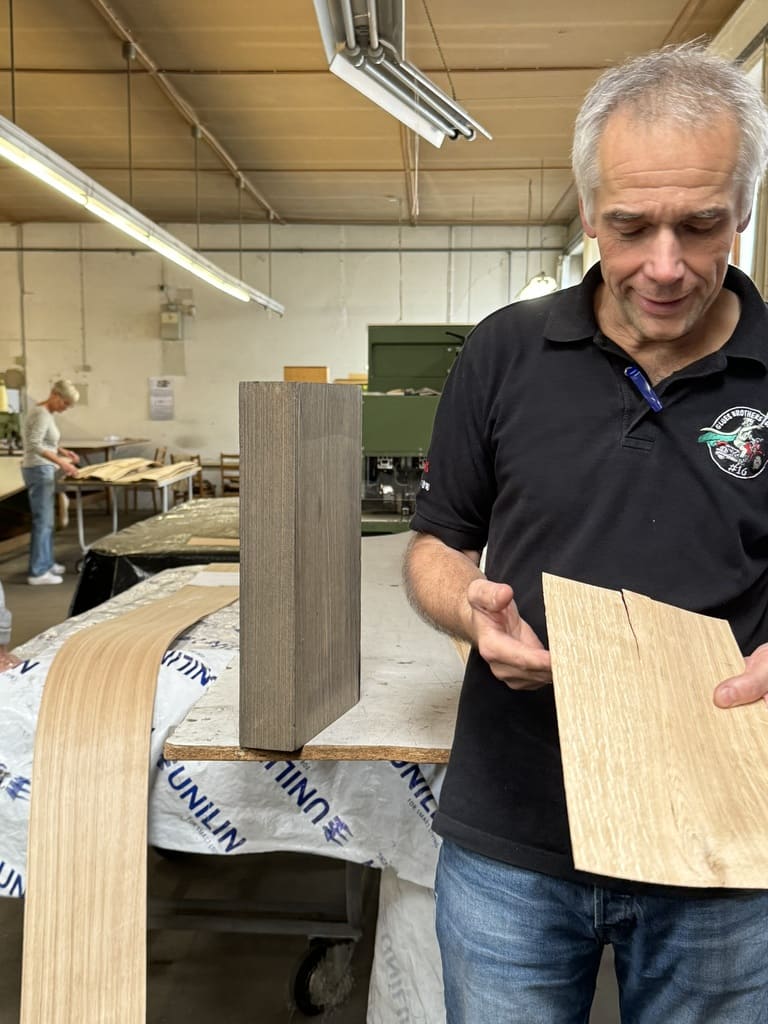
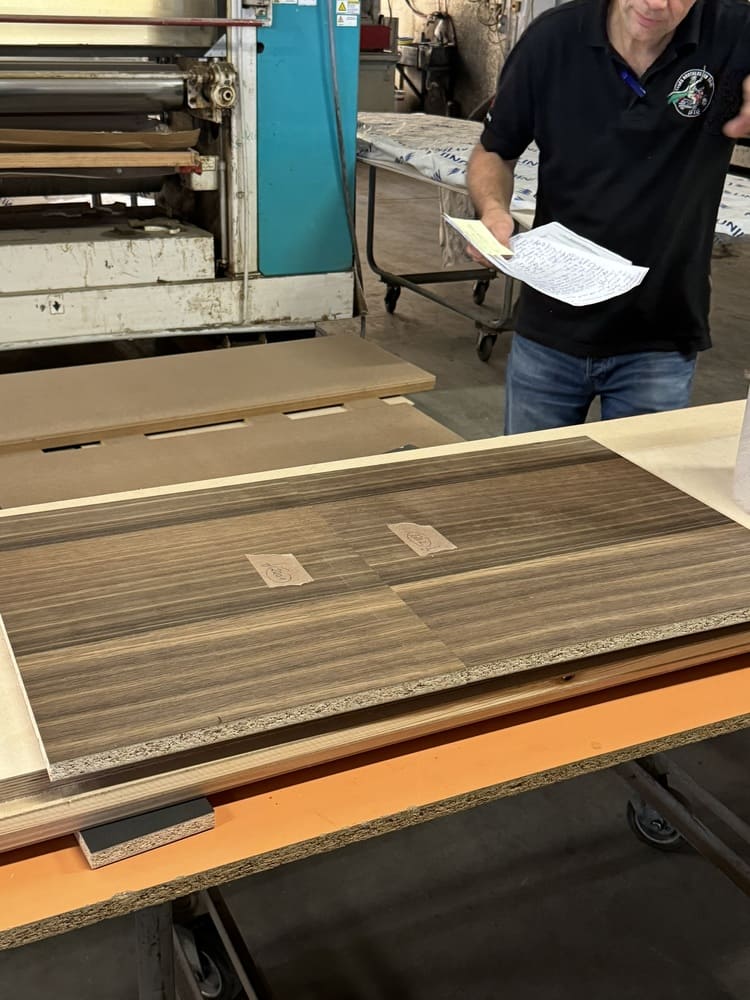
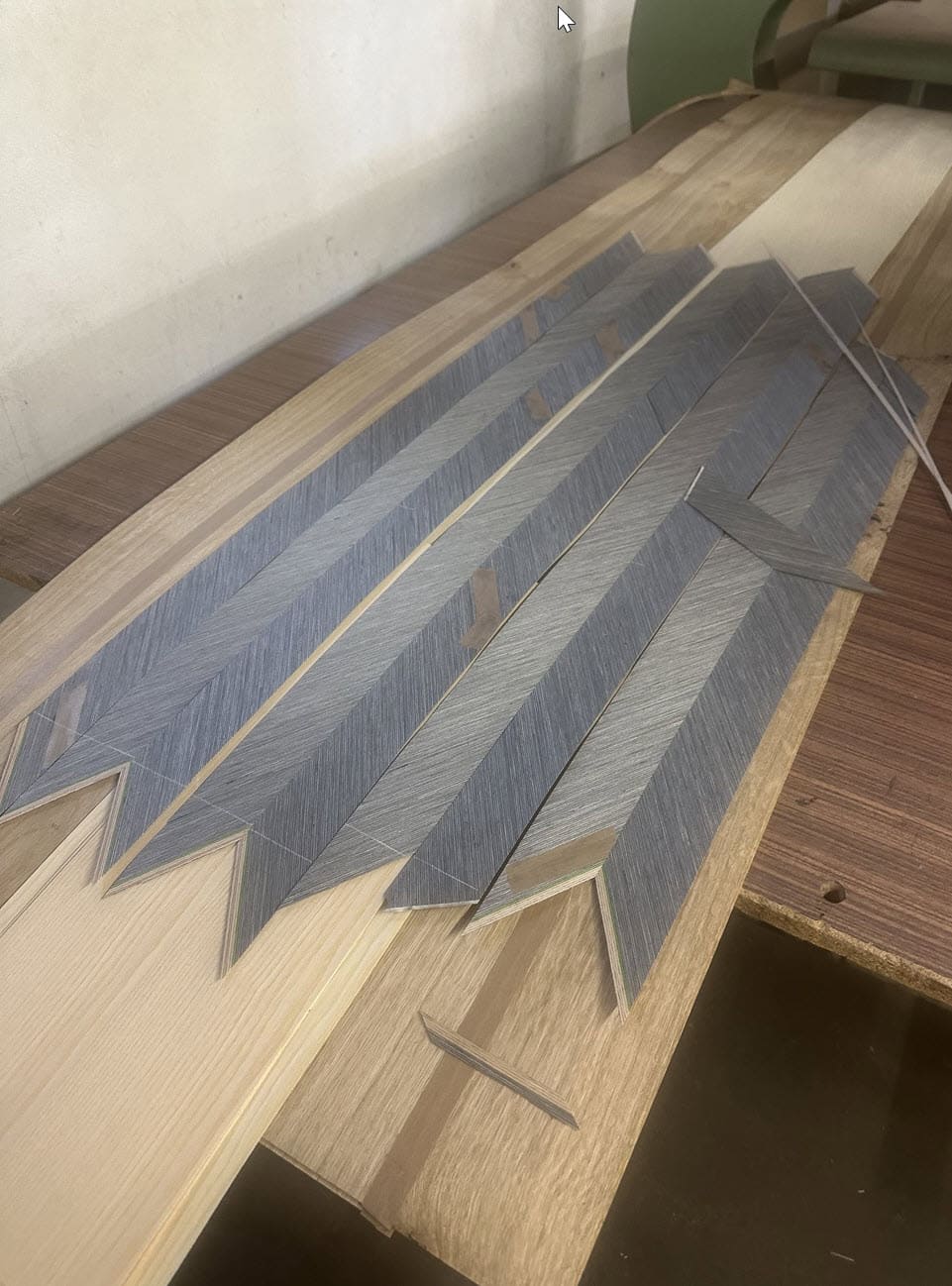
Once the veneers are created, they are applied to a variety of top quality triple-ply chipboard, a furniture grade product that assures stability of the carcass, shelving, and doors of the cabinetry. Specialty boards for extended lengths may be used depending on the cabinet specifications. The veneer application process involves high pressure and steam with a specialty industrial press, then a cooling-off or setting period.
After the veneers are applied to their substrate for an entire design project, they are re-labeled and sent to our veneer finishing shop where skilled craftspeople painstakingly mix and test stains and lacquers then deftly apply the color and finish by hand. Then after the finish is cured, matching or contrasting edge-banding is applied based on the design plan.

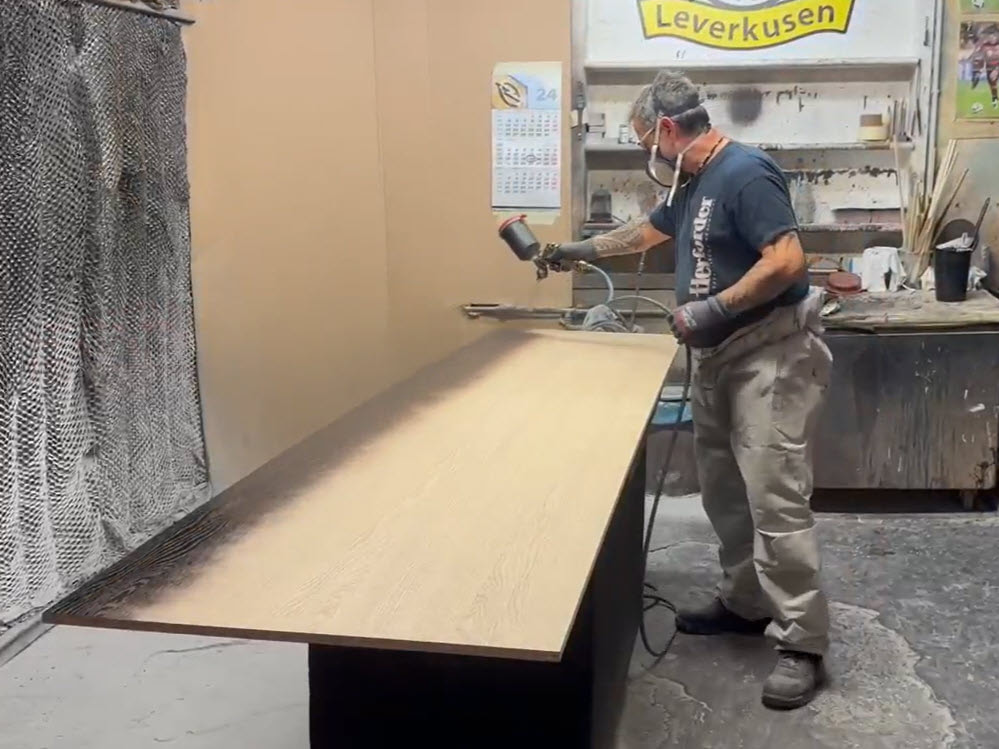
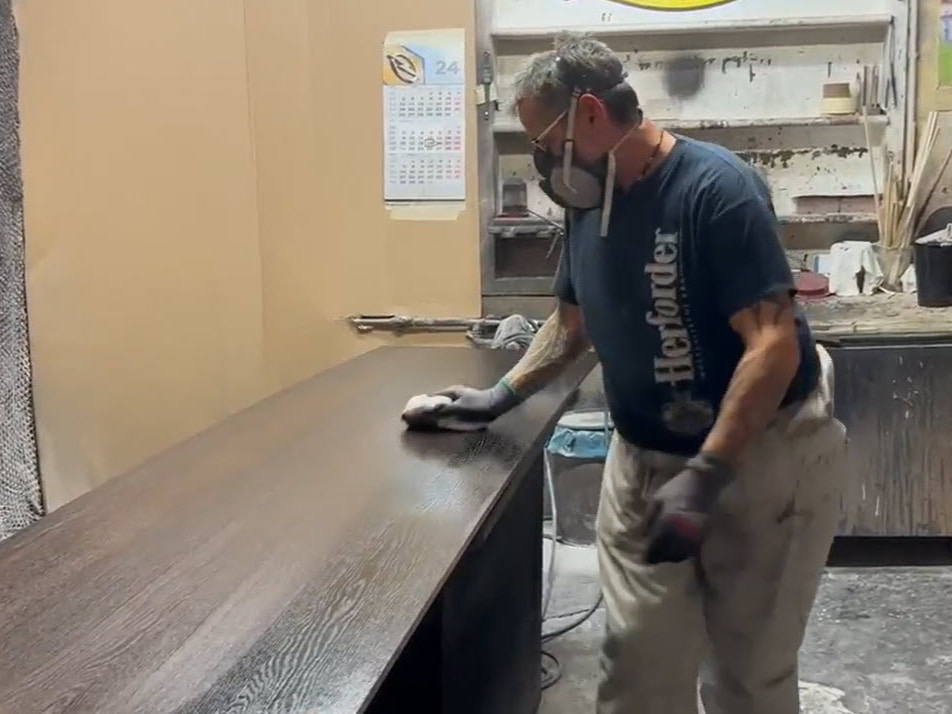

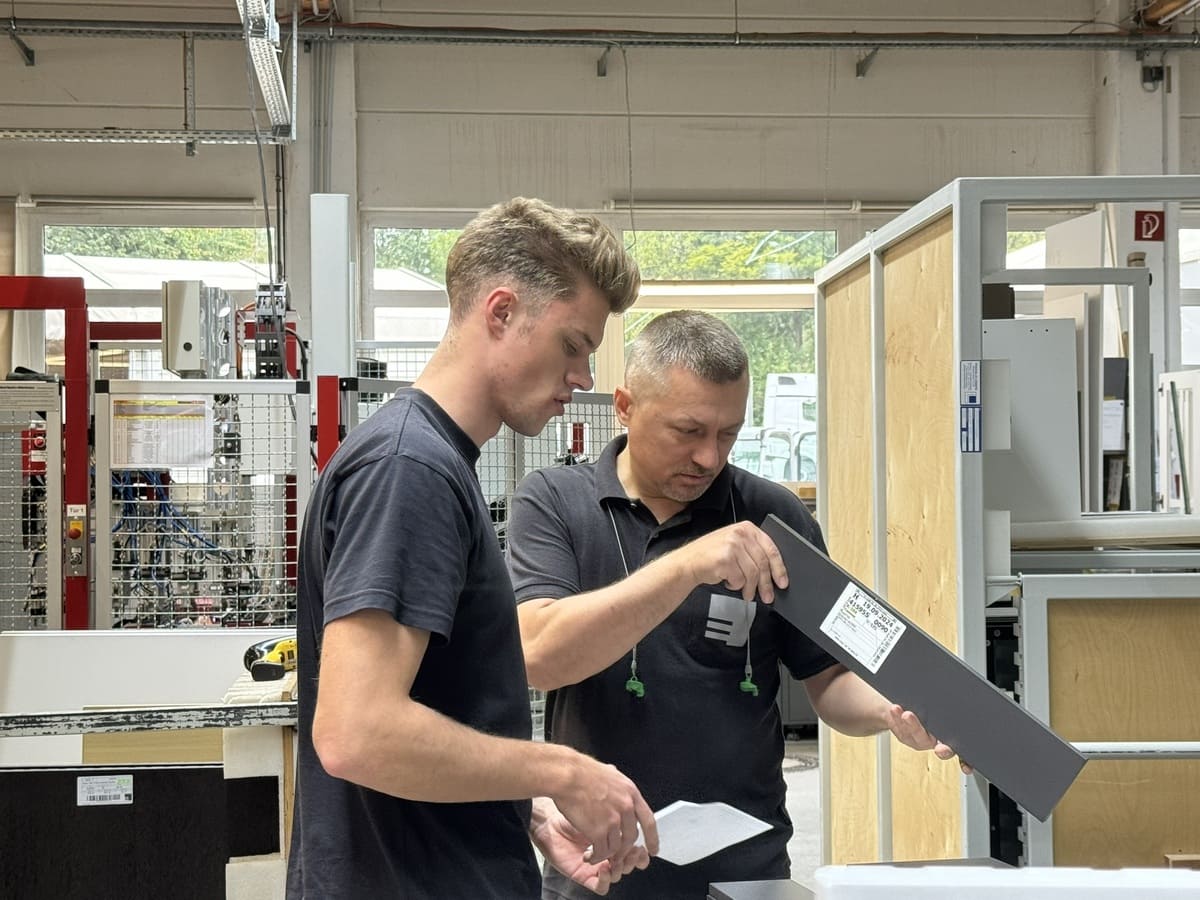
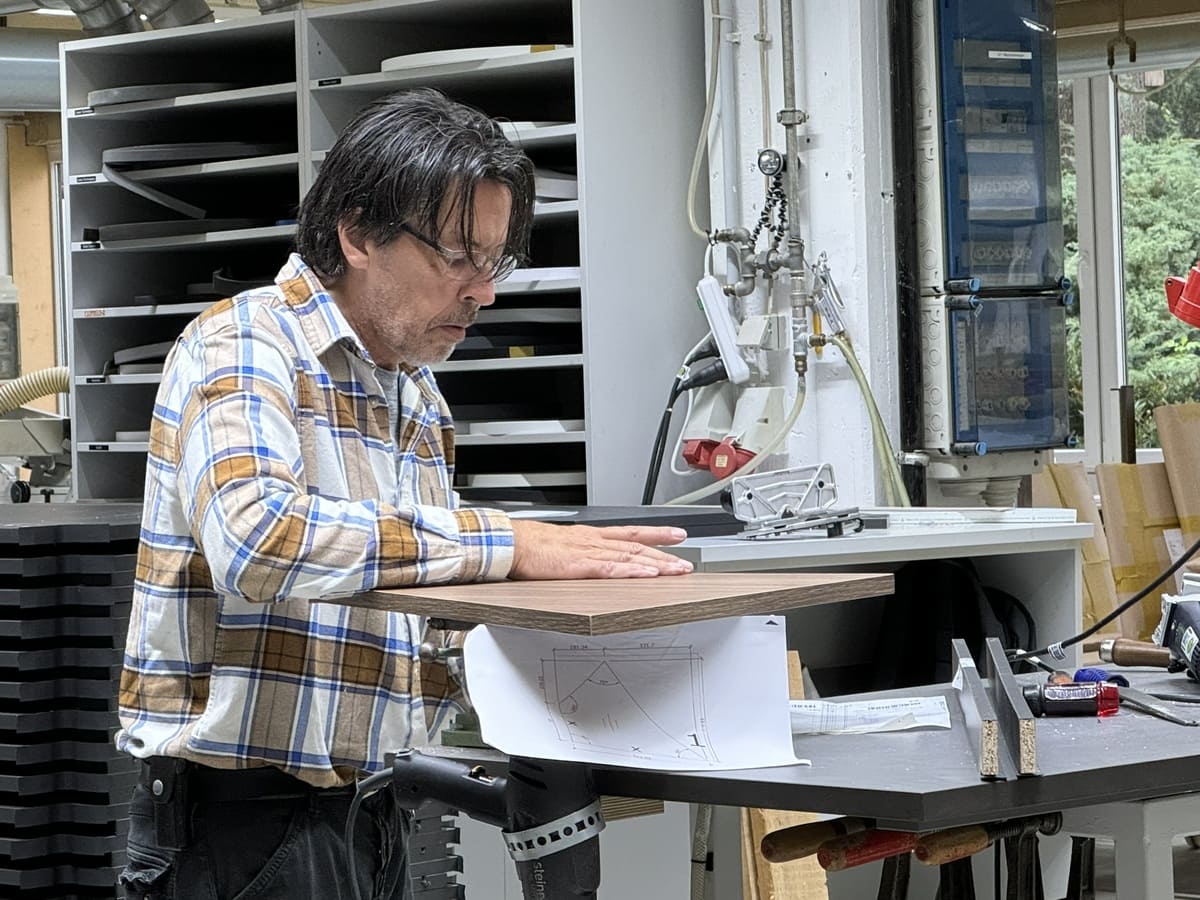
Then the finished veneer boards for a design project are transferred to the cabinetry manufacturing floor where another team of cabinetmaking artisans utilize modern machines, clever innovations, and traditional techniques to produce the cabinetry, using the veneer panels according to the plan created by the veneer craftspeople.
After carefully inspecting the finished veneer boards, holes are drilled, hardware applied, channels are drilled for lighting or brackets that are inserted, and carcasses built.
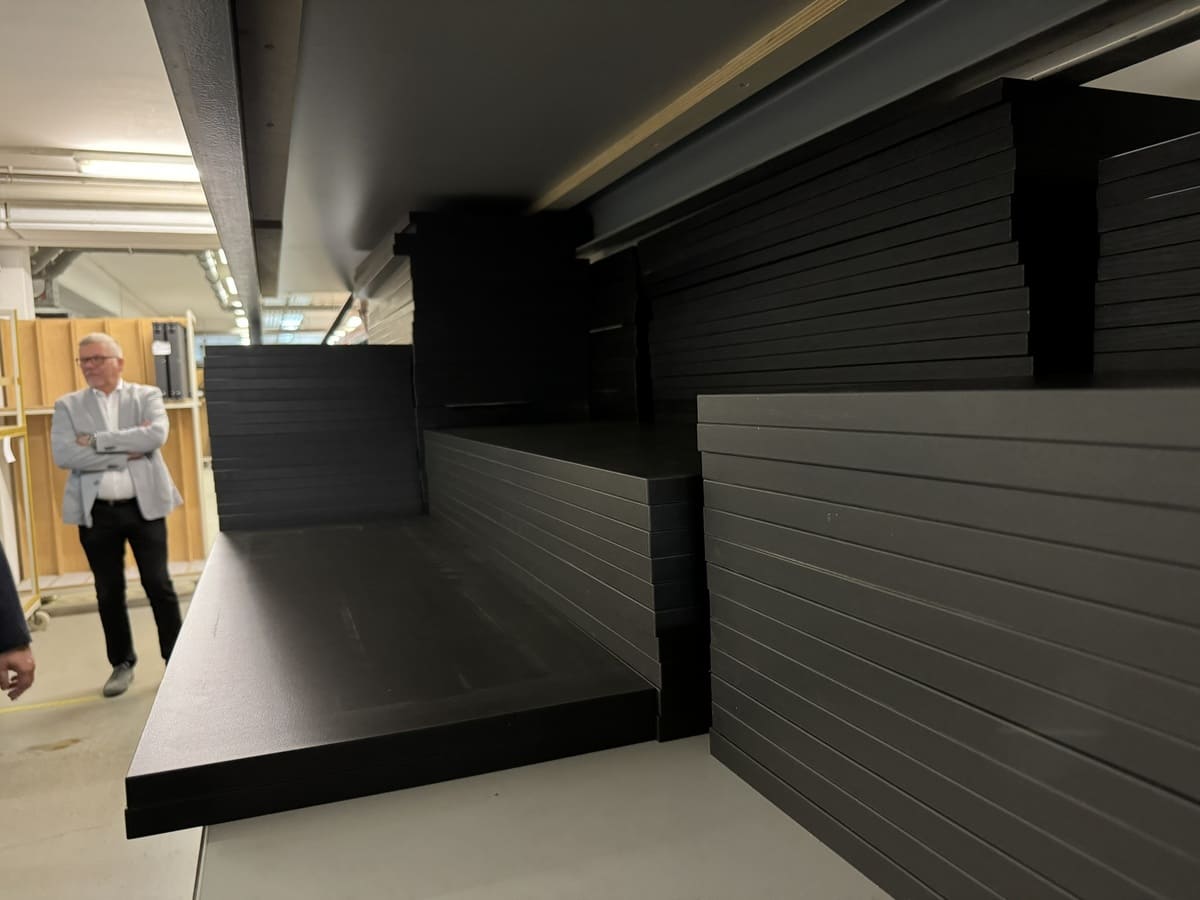
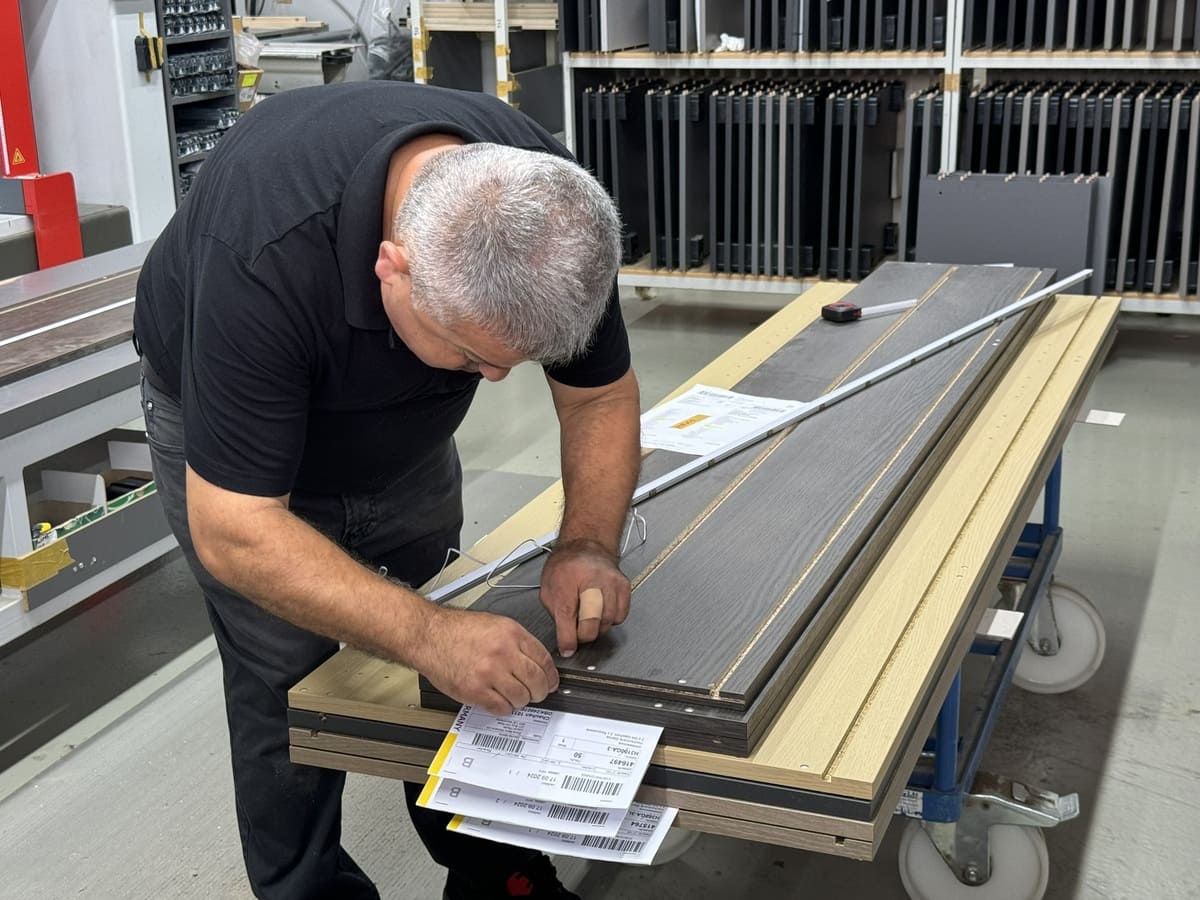
And, finally, a design project’s cabinetry is attentively packaged, labeled, crated with custom-built crates, and loaded aboard a shipping container to arrive at your home to be installed by our experienced installation team.